
“Make each day with your kids worth them remembering fondly 20 years from now and you will live forever”
When I was young, around 9 to 12 years old, I vividly remember my father having a tradition of taking me downtown to Center City Philadelphia to go shopping on the day after Thanksgiving. This adventure wasn’t a Christmas shopping event like Black Friday would later become for me. In fact, I don’t even recall calling it Black Friday back then. We didn’t visit the iconic department store’s Christmas window displays like Strawbridge & Clothier, John Wanamaker’s, Woolworth’s, Sears, or Lit Brothers that dotted downtown. No, our goal was much different.
These trips were some of my first experiences hunting for unique items in the small family shops located along Market Street in the late 1960s. Market Street in 1960s Philadelphia was a bustling hub of commerce and community, its wide sidewalks packed with pedestrians moving between a lively mix of mom-and-pop shops. Hardware stores, their windows crowded with tool displays and neatly stacked buckets, stood shoulder to shoulder with Army-Navy surplus stores, where racks of rugged jackets, boots, and canvas gear spilled out onto the sidewalk. Shoppers of all kinds bustled through the crowd, from workers in overalls searching for supplies to mothers clutching shopping bags brimming with daily necessities. Street vendors dotted the corners, their carts laden with hotdogs, soft pretzels and roasted chestnuts, filling the air with their savory aroma. Above the noise of busy conversations and the occasional honk of car horns, the rhythmic clatter of delivery trucks unloading goods added to the symphony of a street alive with purpose and energy. After World War II, the United States liquidated tons and tons of Army and Navy surplus to auction houses across the country. Entrepreneurs and Hardgoods Shop owners snapped up these items, and startups and hardware store owners began opening some of the first true Army-Navy stores in America. Many of these stores were located along Market Street.
My father, who I would later call “Mr. Gadget,” had an insatiable fascination for items you might “maybe someday need” but never seemed to actually use. His love for these things wasn’t about their collectability or craftsmanship; it was purely about their potential utility. You name it, whatever it was he’d find a reason to bring it home and bring it home to our basement. These treasures often came from the countless mom-and-pop hardgoods stores scattered along and just off Market Street. Each shop was a treasure trove, their narrow aisles crammed with every conceivable tool and gadget. Worn wooden floors creaked underfoot as we navigated past rows of gleaming wrenches, hammers, and bins overflowing with nails and screws. The shopkeepers, often gray-haired men in aprons dusted with sawdust or grease, knew their stock like the back of their hands and always had a story to tell. For my father, these stores weren’t just places to buy things—they were a playground of possibilities, where every item seemed to hold the promise of solving some future problem, real or imagined.
Owners of these shops kept their merchandise in unassuming cardboard boxes scattered across sturdy, makeshift tables and tables, often repurposed from old wooden planks or metal frames. Nothing about these setups was polished or fancy—practicality was the rule of the day. The beauty of these stores lay in their unpredictability. While they might prominently feature Army-Navy surplus items like Army helmets, canteens, knives, bayonets, training dummy guns & hangarages, trench shovels and picks, canvas duffel bags, field jackets, and heavy-duty boots, you could also stumble upon an odd assortment of treasures: hand-cranked flashlights, vintage kitchen tools, bundles of rope, or even a random stack of books. The inventory seemed like a collection of whatever the owners could get their hands on, creating a unique blend of the practical, the obscure, and the outright curious. Unlike the neatly organized and sterile retail chains of today, these stores felt alive, their cluttered interiors inviting exploration. The shopkeepers, often gruff but approachable, were more than salespeople—they were part of the charm, eager to haggle over prices or share the backstory of a particularly odd find. Shopping here wasn’t just about buying—it was about discovery, adventure, and the thrill of finding something you never even knew you needed. I really believe it was these early shopping trips with my father that sparked the passion I now have for antique treasure hunting. Many of the items that were in these stores would now be highly valuable collectable today.
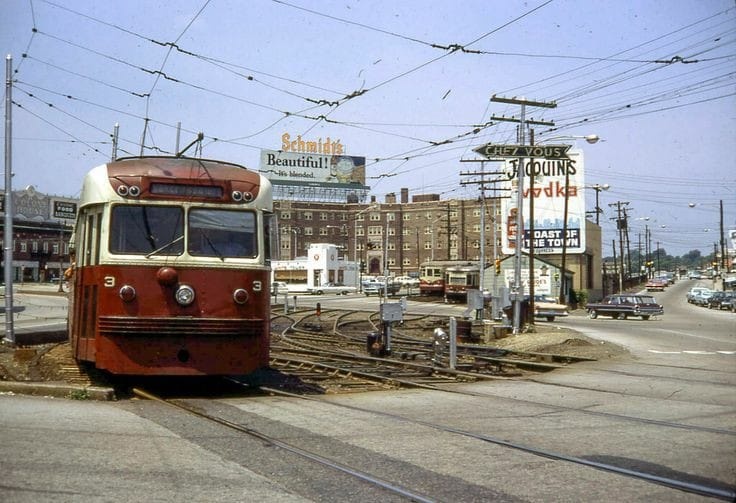
Red Arrow trolly
As a child, trips like this weren’t always fun for me. They were a little scary actually as I remember. All that mattered was I was with my dad. They started very early, when we would walk down Lasher Road in Drexel Hill to take the Red Arrow trolley to 69th Street in Upper Darby, where the SEPTA subway station was located. My father called it “the El,” not the subway. It was called the El because for half the ride, it was an elevated train.
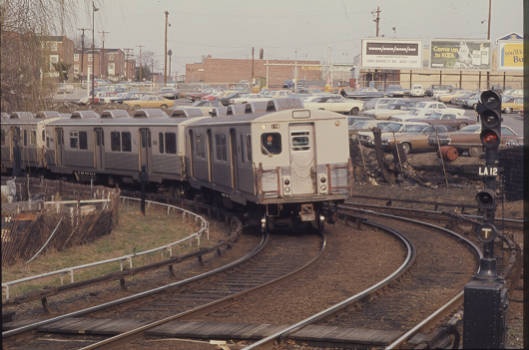
The El
From 69th Street, the line entered West Philadelphia and ran elevated over Market Street until 46th Street, where it curved north and east, descending underground via a portal at 44th Street to become a subway.
I vividly remember that ride, especially when the train went underground. It was dark and had a distinct smell that I’ll never forget. To this day, I believe my father didn’t do this every year for me to have fun but to teach me how to navigate the city and make it within my comfort zone. This skill would later help me in life when I worked in New York City as a young adult.
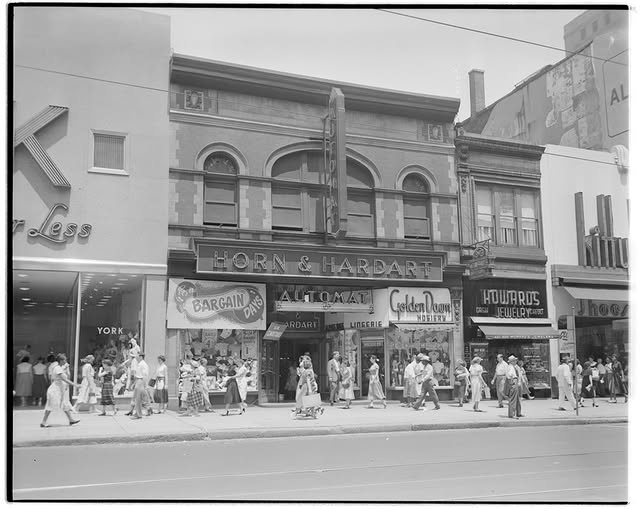
Horn & Hardart
Once we exited the subway, our first stop was, of course, breakfast at the famous Horn & Hardart Automat at 9th and Market Streets. The Automat was legendary for its affordable, freshly prepared dishes served through self-service vending machines. Breakfast options in the 1960s included scrambled eggs, bacon, sausage, pancakes, pastries, and coffee. The coffee was particularly renowned, dispensed from iconic dolphin-head spouts. For early risers and workers needing a quick, convenient meal in bustling cities like New York and Philadelphia, the Automat was a cherished institution.
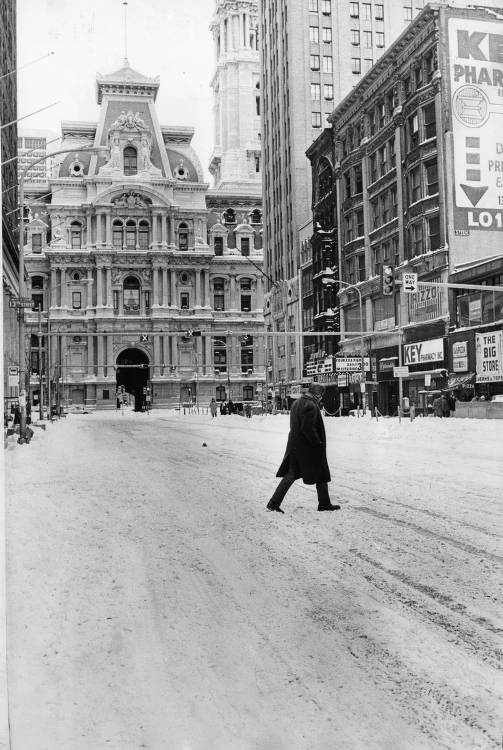
City Hall market Street
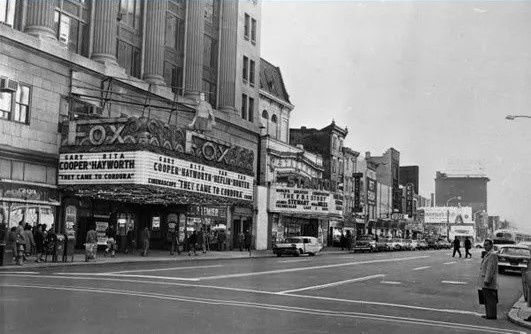
Market Street
After breakfast, we began our trek down Market Street, hunting for treasures. Inevitably, I would forget to bring a hat or gloves so my father would need to buy me a heavy wool hat and gloves because it was always very cold that day. One memory that stands out—and might seem odd—was the way my father held my hand as we walk down market Street. He wasn’t the warm, fuzzy type. I don’t ever recall him holding my hand palm-to-palm or giving me a hug. Instead, he held my hand fingers-to-fingers, with his nails digging into my tender palms. It hurt a little the whole day, but I never dared to say anything. That’s just the way things were back then. Fathers didn’t kiss or hug their son much. Kids didn’t tell their parents every little thing that bothered them the way they do today. They didn’t wine or cry at the drop of a hat either. You learned to deal with it.
Looking back, these trips weren’t just shopping outings; they were life lessons. They taught me independence, adaptability, and resilience. Although they didn’t feel like fun at the time, they became cherished memories that shaped who I am today. My father’s love of gadgets, his methodical planning, and even his peculiar way of holding my hand are all part of the legacy I hope to pass down to future generations.
I truly believe times with my father like these started me on the path of my lifelong passion for being in the retail business, an antique dealer and a landlord. It was these trips that sparked that fire.
Today, I take you, my grandkids, on day trips like this, let you explore my shop, go fishing, visit Goodwill, and embark on other adventures to help you discover your passions. My hope is that you’ll learn to appreciate the thrill of finding something special, breaking free from the routine of the everyday and embracing life’s unique moments.
Discover more from Beebop's
Subscribe to get the latest posts sent to your email.

 Beebop's