

Today’s comedians and late night hosts often thrive on shock value. They push the boundaries not necessarily to say something meaningful, but to generate headlines and stir publicity. In an industry where attention equals relevance, the goal isn’t always insight—it’s noise. Most late-night hosts and comics are only as sharp as their writers. Their brilliance comes from teams crafting clever lines, while their real talent lies in timing and delivery.
But when you dig beneath the surface, many of these celebrities reveal themselves to be surprisingly shallow on serious topics like politics, science, world events, and history. Their personal opinions are often formed within the narrow circle of colleagues and friends around them rather than from deep knowledge or study. In truth, most could never thrive outside the entertainment bubble—they are experts only in performance, not in substance. If you don’t like or agree with what a comedian has to say, the strongest response isn’t outrage—it’s to simply stop watching or paying attention.
There are exceptions. Jerry Seinfeld, for example, has always had his own voice. He may not dive into politics or philosophy, but his opinions—on comedy itself, on culture, on the state of free speech—are genuinely his. Agree or disagree, he doesn’t rely on shock or borrowed material to keep his relevance. He built his career on sharp observational humor that came straight from his own perspective.
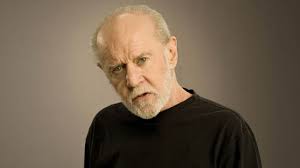
And then there was George Carlin. Agree with him or not, Carlin was in a league of his own. His comedy evolved as both he and his audience matured. In his early career, he was playful, light, and clever—the “Hippy-Dippy Weatherman” and radio parodies like “Wonderful WINO” made him a favorite on television. But as the decades rolled on, his style shifted. By the 1990s, in specials like Jammin’ in New York, he was tearing into government, consumer culture, and war with biting social commentary. His later works, such as Life is Worth Losing (2005), were darker, angrier, but profoundly insightful. Carlin wasn’t just telling jokes—he was dissecting society, forcing his audiences to confront uncomfortable truths.
Carlin proved that comedy could be more than a laugh; it could be philosophy wrapped in a punchline. Most comedians, even the successful ones, remain dependent on writers, trends, and the entertainment bubble. Carlin—and to a degree Seinfeld—stand out as reminders that comedy at its best comes from authenticity and independent thought.
Discover more from Beebop's
Subscribe to get the latest posts sent to your email.

 Beebop's