
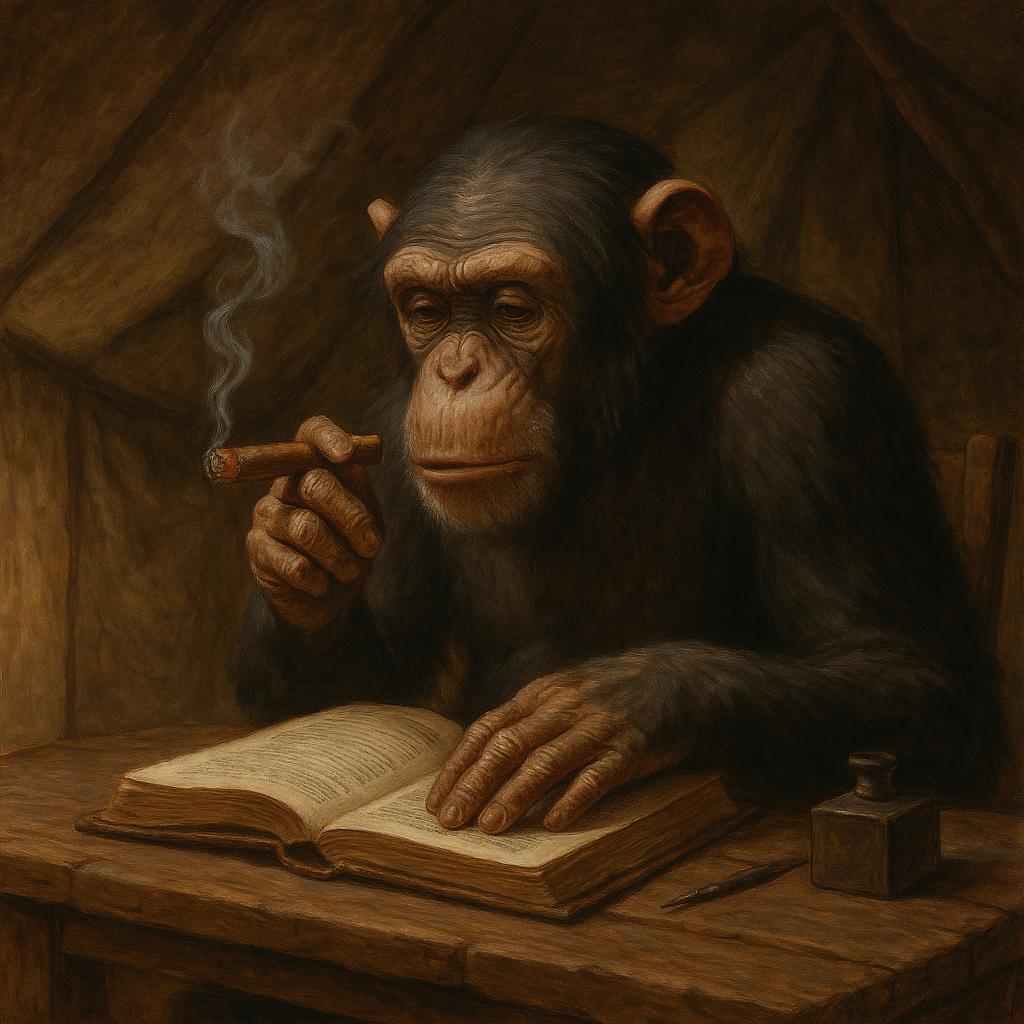
“Every human possesses a moral engine, even if unrecognized. Believer or not, we can pause, reflect, and act beyond instinct. That ability—free will—is why humans can build civilizations and also shatter them.”
“Man, when guided by God, morals, law, and justice, is the best of all creatures; but when cut off from them, he becomes the worst, for he alone bears the burden of free will.”
This is not just an ancient observation—it is the defining truth of our era. In the past century alone, humans have invented technologies that would have seemed like magic to our ancestors: nuclear energy, artificial intelligence, gene editing, social media, and algorithms that can predict our behavior almost before we act. These inventions are remarkable—they demonstrate the boundless creativity of the human mind—but they also illuminate a stark reality: no other creature bears the burden and responsibility of free will the way humans do. Intelligence alone is not enough; free will directs intelligence toward purpose, innovation, and deliberate choice.
Consider our closest relatives, the chimpanzees. They often display behaviors that look human: forming alliances, teaching younger chimps, consoling distressed troop members, or sharing food. To an observer, these actions may appear moral or empathetic. Yet the chimp’s behavior is largely driven by instinct, social hierarchy, and the expectation of reciprocity. When a chimp shares food, it strengthens bonds and ensures survival, not because it reflects on fairness or principle. It does not step back to ask itself: “Is this the right thing to do?” If we could grant a chimp true free will, it could suddenly make choices beyond instinct, direct its intelligence toward innovation, build shelters, or experiment creatively—things intelligence alone could not achieve.
And the sheep still grazes in the fields as it did thousands of years ago. Its actions are entirely determined by biology and survival instinct; it neither innovates nor questions its path. Humans, by contrast, can look at a field and imagine irrigation systems, fertilizers, or vertical farms. We can choose to innovate, plan, and act beyond what is necessary for survival. Free will is what allows us to direct our intelligence toward shaping the world rather than simply reacting to it. That is free will made tangible.
Humans can act against our instincts, unlike animals—and this is where free will reveals its true weight and divine origin. Consider finding a lost wallet. Instinctively, we might keep it for the money, or simply ignore it to avoid effort or risk. Yet humans can pause, reflect, and act contrary to these self-serving instincts, choosing honesty and integrity. This capacity to act against natural inclinations, guided by principles often buried deep in our subconscious minds, reflects a moral sense given to us by God for believers, but even those who do not consciously believe in God possess the ability to reflect on right and wrong and choose ethical action. Intelligence alone would never compel such moral reflection; free will makes the choice possible.
Inventions provide another striking illustration. The Wright brothers building the first airplane exemplifies free will directing intelligence: they overcame fear, repeated failures, and instinctual caution to achieve flight—a feat no animal could imagine or execute. Free will allowed them to channel intelligence into deliberate, world-changing action.
But free will carries a dark side, one no other creature can match. When humans abandon the moral guardrails God has given us—or act without any ethical reflection at all—the results can be catastrophic. The Holocaust illustrates how free will, applied without conscience, can magnify intelligence and planning into unimaginable cruelty. Humans designed and executed atrocities far beyond any predator’s instinctive violence, demonstrating the terrifying potential of intelligence unrestrained by morality.
With this gift comes enormous responsibility. Technology, innovation, and influence amplify our choices, for good or ill. A single human can, with a keystroke or invention, affect millions. Without grounding principles—morality, law, and justice—our actions can magnify harm as much as they can create good. Free will is both a superpower and a weighty burden, because it directs intelligence toward purpose, morality, or destruction.
In the digital age, the stakes have never been higher. Algorithms can manipulate behaviors, artificial intelligence can make decisions for us, and global connectivity means one action can ripple across continents instantly. Free will is no longer a private responsibility—it is a societal imperative. Guided by principles, our freedom can elevate us. Unguided, it can plunge us into ruin.
Ultimately, humanity’s greatest invention may not be AI, nuclear energy, or space travel—but the conscious, deliberate use of the freedom that makes us human. It is our ability to act beyond instinct, to choose morality over impulse, and to direct intelligence toward imagination, creation, and a better world, that defines us. How we wield that freedom will determine whether we are the best or worst of all creatures.
Discover more from Beebop's
Subscribe to get the latest posts sent to your email.

 Beebop's