
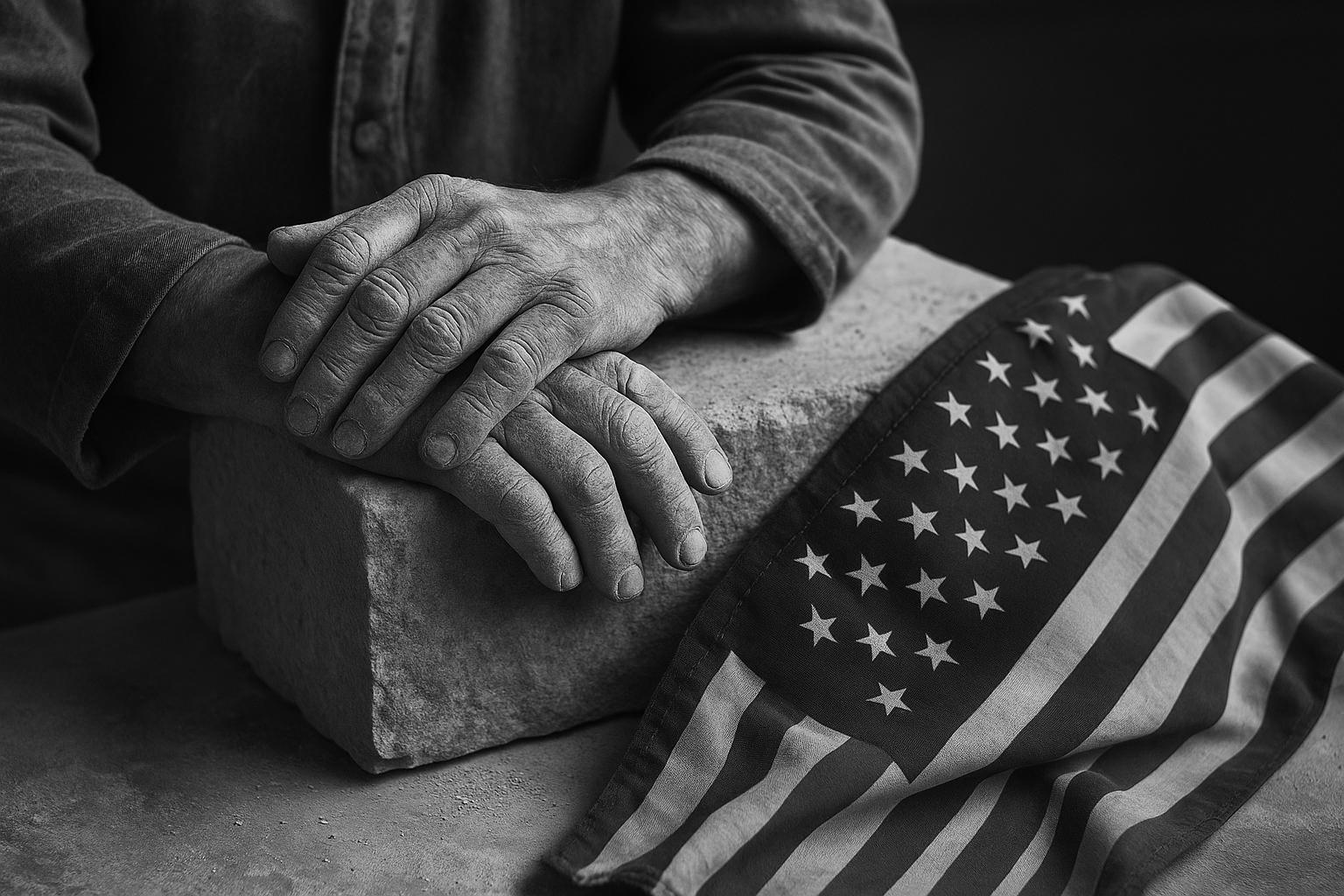
“We came to America, not to bring our past, but to build our future.”

When we talk about what keeps a nation united, people usually point to its laws, its army, or its economy. But in truth, culture is the real glue. Political systems can change, borders can shift, and economies rise and fall — but a shared sense of identity is what keeps a country from splintering.
Look at the United States. Despite its divisions, the U.S. remains remarkably stable compared to other large nations. Why? Because underneath all the noise, we still speak the same language, share the same pop culture, and recognize the same national ideals. You can drive from Maine to California and, even though the accents and attitudes change a bit, you know how to navigate life. You understand the language, customs, the signage, the food, and the humor.
That’s not an accident — it’s the result of two centuries of cultural fusion.
The Great Assimilation
During the late 19th and early 20th centuries, the U.S. experienced an enormous wave of immigration — Italians, Irish, Germans, Poles, Greeks, Jews from Eastern Europe, and families from the Middle East. They came here chasing a simple dream: a better life.
And here’s what’s remarkable — they didn’t come to change America; they came to become part of it.
Many of those families, including my own ancestors and millions like them, understood that opportunity came with responsibility. They learned English. They worked hard to fit in. They raised children who pledged allegiance to the flag every morning in school.
Some even changed their names to sound more “American.” Giovanni became John. Cohen became Cohn. Kostopoulos became Costa. It wasn’t shame — it was adaptation. They held on to their religion, their recipes, their traditions, but they embraced the American identity as the common language that united them all.
Unity Through a Shared Dream
America has never been united by ethnicity or geography — it’s united by an idea: that anyone, from anywhere, can come here, work hard, and become part of something larger.
That’s incredibly powerful. It means that an Italian stonemason in 1900, a Greek diner owner in 1940, a Polish steelworker in 1950, and a Syrian shopkeeper in 1970 all shared the same belief — that their children would be Americans first, carrying forward the same national dream.
And here’s the remarkable truth: their great-grandchildren often did far more than just live that dream — many went on to become doctors, business owners, inventors, entrepreneurs, and even millionaires.
Generationally, the leap was extraordinary. Within just three or four generations, families who once arrived with nothing but a suitcase and a prayer found themselves living lives of comfort and success that would have been unthinkable in the countries they left behind.
That’s the American story in its purest form — the story of upward mobility powered by freedom, work ethic, and belief in possibility. No government plan or ideology could have scripted it. It happened because people believed they could rise, and because this country allowed them to try.
The Soviet Contrast: Unity by Force, Not Belief
If you want to understand how vital cultural cohesion really is, look at the fall of the Soviet Union.
On paper, the USSR was one massive nation, held together by a single government, a powerful military, and a shared ideology. But in reality, it was a collection of fifteen very different republics — Russians, Ukrainians, Georgians, Kazakhs, Armenians, Lithuanians, and more — each with its own history, language, and religion.
They were united by fear and control, not by shared identity or voluntary belief. The moment that control weakened in the late 1980s, the system collapsed almost overnight. The people didn’t see themselves as “Soviets” — they saw themselves as members of their own cultures first. Once the iron grip of Moscow loosened, they naturally broke apart.
That’s the lesson: you can hold a nation together by force for a while, but only shared culture and common values can hold it together for good.
America works because our unity comes from the bottom up — not from orders, but from belief.
My Family’s Story
My own grandfather came to this country at the turn of the century with nothing — a poor stone cutter from Italy who worked with his hands and his back, not a résumé. He built his life one block of marble at a time.
My father was raised in a fully Italian neighborhood in West Philadelphia. Back then, it felt very much like Italy — the food, the language, the religion, the traditions, and the community spirit. But there was one major difference: he and most others in that neighborhood wanted their future generations to become Americans first.
I don’t speak Italian, even though my father did. I’m proud — deeply proud — to be 100% Italian, but I see myself as an American first, and I love this country. That, to me, is what assimilation was all about — keeping the best of your heritage while embracing something greater that unites us all.
The miracle of America has always been that people from every corner of the world arrived speaking different tongues but left their children speaking the same one. That’s what turned diversity into strength instead of division.
If that stops happening — if people no longer see themselves as part of one shared American culture — then the very idea that “out of many, one” begins to crumble. A nation divided by language, custom, and allegiance cannot stand united for long.
When Assimilation Weakens
Today, we face a challenge. When large groups of newcomers come to America and hold too tightly to the old country — when they choose to live apart instead of becoming part of the American story, when they dislike the US, when they try to change who we are — it begins to chip away at the unity that made this nation strong.
It’s not about where someone comes from; it’s about whether they’re willing to add their voice to the national chorus.
When communities share their traditions while also embracing our common culture, everyone benefits. We gain new food, music, ideas, and stories — all woven into the larger American fabric. But when people isolate themselves completely — building enclaves that follow different rules, laws, languages, or loyalties — that fabric begins to fray.
The miracle of America only works when people want to be part of it. The moment we stop seeing “American” as a shared identity worth adopting, we risk losing the very strength that built this country.
The Lesson and the Warning
The lesson of history is clear: a nation is only as strong as the culture that binds its people together.
America was never perfect, but it worked because those who came here wanted to become American — not to rebuild what they left behind, but to build something new together.
“E pluribus unum” — Out of many, one.
That’s more than a motto. It’s a promise.
But it only works when the “many” truly want to become “one.”
My Hope for the Future
My hope is that future generations never forget what made this country exceptional — that the miracle wasn’t just freedom or wealth, but the willingness of people from every background to become one people with a shared destiny.
If we protect that — if we keep teaching our children that being American means something — then no challenge, division, or wave of change can tear this nation apart.
Because what unites us isn’t blood or birthplace. It’s belief — belief in this great American experiment that turned ordinary immigrants into extraordinary citizens.
Discover more from Beebop's
Subscribe to get the latest posts sent to your email.

 Beebop's