


“No man is above the law and no man is below it.”
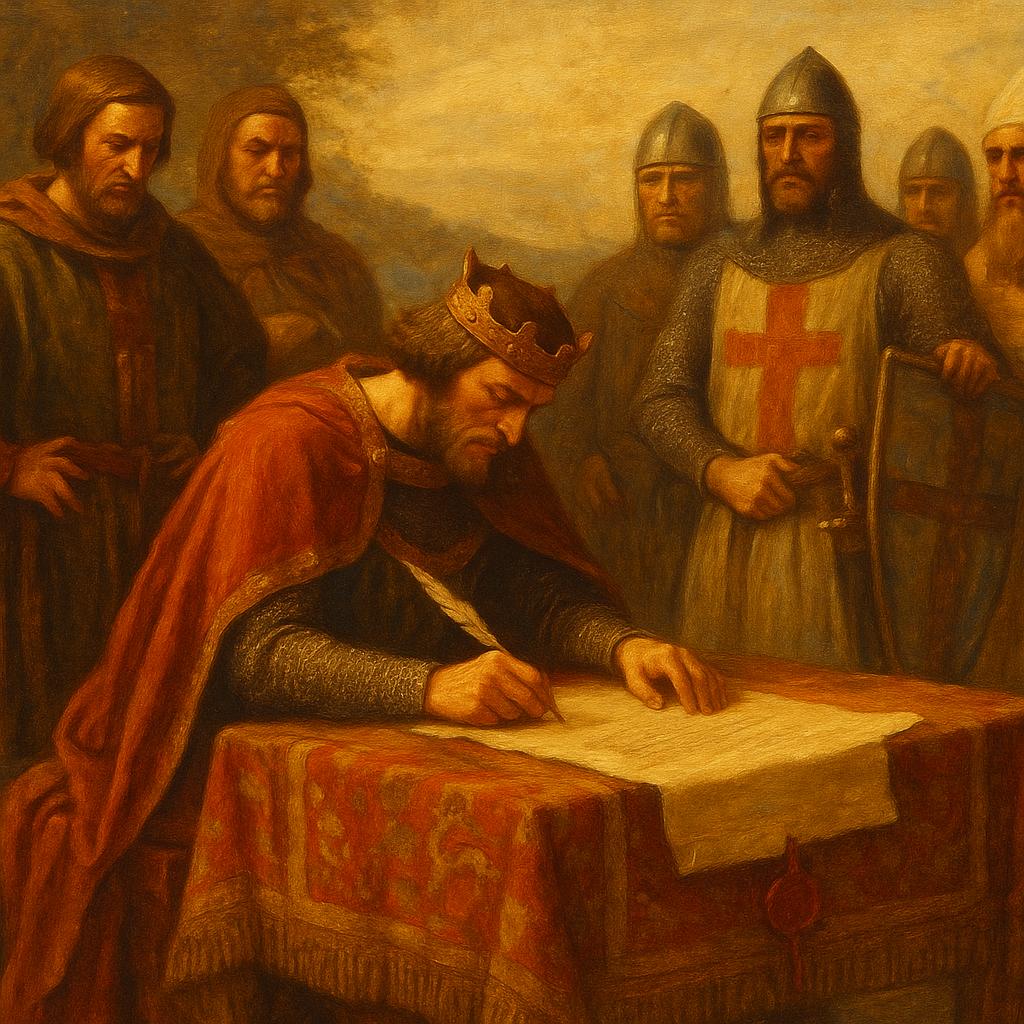
If you asked a hundred people what the Magna Carta was all about, I doubt more than ten could give you a straight answer. Most might say, “Something about kings and laws,” but few would know that in 1215, on a field called Runnymede, a group of rebellious barons stood up to the most powerful man in England — King John — and forced him to sign a document that changed the course of history.
It wasn’t a grand declaration of freedom for all people, not yet. It was, in truth, a peace treaty between a desperate king and angry landowners. But hidden in those Latin words was a revolutionary idea: even the king must obey the law. That single concept became the seed of constitutional government — the ancestor of everything from the U.S. Bill of Rights to the right to a fair trial.
When I think about that moment, I picture a hot June day, tension thick in the air, the sound of horses and parchment, the smell of wax and ink. I imagine the courage it took for those men to stand up to a monarch who could have easily had them executed. Yet they did it — and because they did, we inherited the notion that power must answer to the people, not the other way around.
What fascinates me most isn’t just the document itself, but how fragile freedom can be. The Magna Carta reminds us that every liberty we enjoy was once a bold act of defiance. It wasn’t given; it was demanded. It was signed in fear, not celebration — but it lived on, outlasting every king, every war, every empire that followed.
And yet, here we are — over a thousand years later — still struggling with the same issue. Legal defense, wealth, and influence often place certain individuals above the law, while others face the full weight of it. The Magna Carta’s promise — that no one is beyond accountability — remains one of history’s most important yet unfinished lessons.
Maybe that’s why it still matters. Freedom begins when ordinary people stand together and say, “Enough.”
Discover more from Beebop's
Subscribe to get the latest posts sent to your email.

 Beebop's