
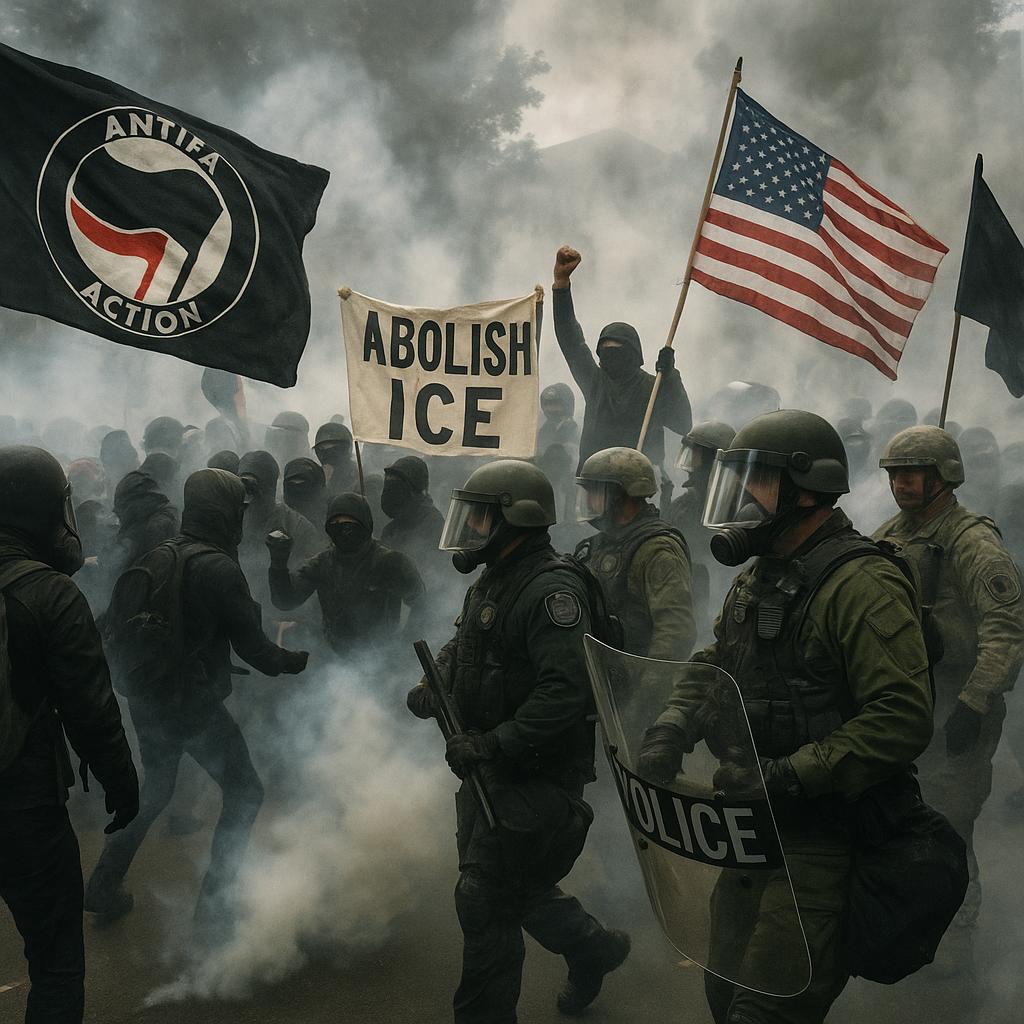


When Will the John Brown Moment Happen again in the US?
Every so often, history echoes back at me — faint at first, then louder when I stop long enough to listen. Lately, I’ve been thinking a lot about John Brown, and how his defiance once exposed the deep cracks in America’s foundation. What happened in 1859 might seem like ancient history, but to me, the argument that fueled his rebellion — states’ rights versus federal power — is standing right on our front porch again.
John Brown was a man obsessed with conviction. He believed slavery wasn’t just a legal issue; it was a moral evil so great that no law could justify it. When the federal government refused to act, Brown took matters into his own hands. He led a small band of followers to Harpers Ferry, Virginia, seized a federal armory, and tried to spark a slave uprising. He failed — captured by U.S. Marines under Robert E. Lee — but his act set a fire that would burn into the Civil War just sixteen months later.
Brown’s raid forced America to face a question it had been dodging for decades:
When the laws themselves are unjust, who decides what is right — the states, the people, or the federal government?
When I look around today, I can’t help but see the same pattern forming. States are openly challenging federal authority — refusing to enforce immigration laws, pushing back against prosecution policies, or taking border security into their own hands. Washington insists it alone sets the rules, but governors are saying, “If you won’t protect us, we will.”
In Brown’s time, the issue was slavery. Today, it’s immigration, law enforcement, and federal overreach. Both eras are fueled by the same dangerous question: Who really runs this country?
And here’s where I get concerned — because I believe the conflict has already started. This isn’t theoretical anymore. It’s the most serious crisis our nation faces right now, far more important than any foreign conflict or global headline. It’s pulling us apart in ways that may never be healed if we keep pretending it’s politics as usual.
Every day, I watch our so-called leaders go on television or social media, turning serious national issues into a performance. Instead of coming together behind closed doors to fix the problem, they chase attention with tweets, sound bites, and proclamations that only divide us more. It’s exhausting — and it’s dangerous.
Let me be clear: I’m not taking sides here. I’m not trying to argue who’s right or who’s wrong, or which policy should win. What I’m saying — and what I believe deeply — is that a country divided against itself cannot stand. We’ve been here before, and the last time it happened, we tore ourselves apart for four long, bloody years.
If I could speak directly to our leaders, I’d say: sit down in private, without cameras or microphones, and start acting like adults. Stop performing for the crowd. Stop worrying about the next election and start worrying about the next generation.
I’m not calling for another John Brown. His rebellion brought bloodshed and chaos, and I don’t want to see that repeated. But I do believe we’ve reached a point where conviction is once again colliding with law — and that’s how nations fracture. The “John Brown moment” this time won’t come from one man with a rifle; it’ll come when millions of citizens — or entire states — decide they no longer trust the federal system to act in their interest.
History has a hard way of teaching lessons we ignore. When people stop believing the law is fair, they eventually stop obeying it. That’s what happened in 1859, and I fear we’re drifting toward it again.
It doesn’t matter what side you’re on — the left, the right, or somewhere in between — because in the end, there are no sides in a house divided. There’s only collapse.
If we don’t find a way to restore faith in both justice and leadership, the next John Brown moment won’t be in a history book — it’ll be in our headlines.
Discover more from Beebop's
Subscribe to get the latest posts sent to your email.

 Beebop's
Well said, and I agree with you about what I would like those in power to do and be. I’d not really thought of John Browns rebellion but you have made a solid case for history and it’s sad ability to mimic itself…
LikeLiked by 1 person