
I was about ten years old when I first learned what a contract was. I don’t remember where I heard the word—maybe on a TV show or in school—but whatever it was, it sounded official, grown-up, and powerful. In my young mind, a contract was the kind of document that settled things forever, the kind of thing you could point to and say, “See? It’s right there in writing.”
At that age, my world still revolved around my mother. She was the center of everything—the one steady anchor in the chaos of childhood. I couldn’t imagine a future where I wasn’t by her side, and I certainly couldn’t imagine a world where she wouldn’t be right there beside me.
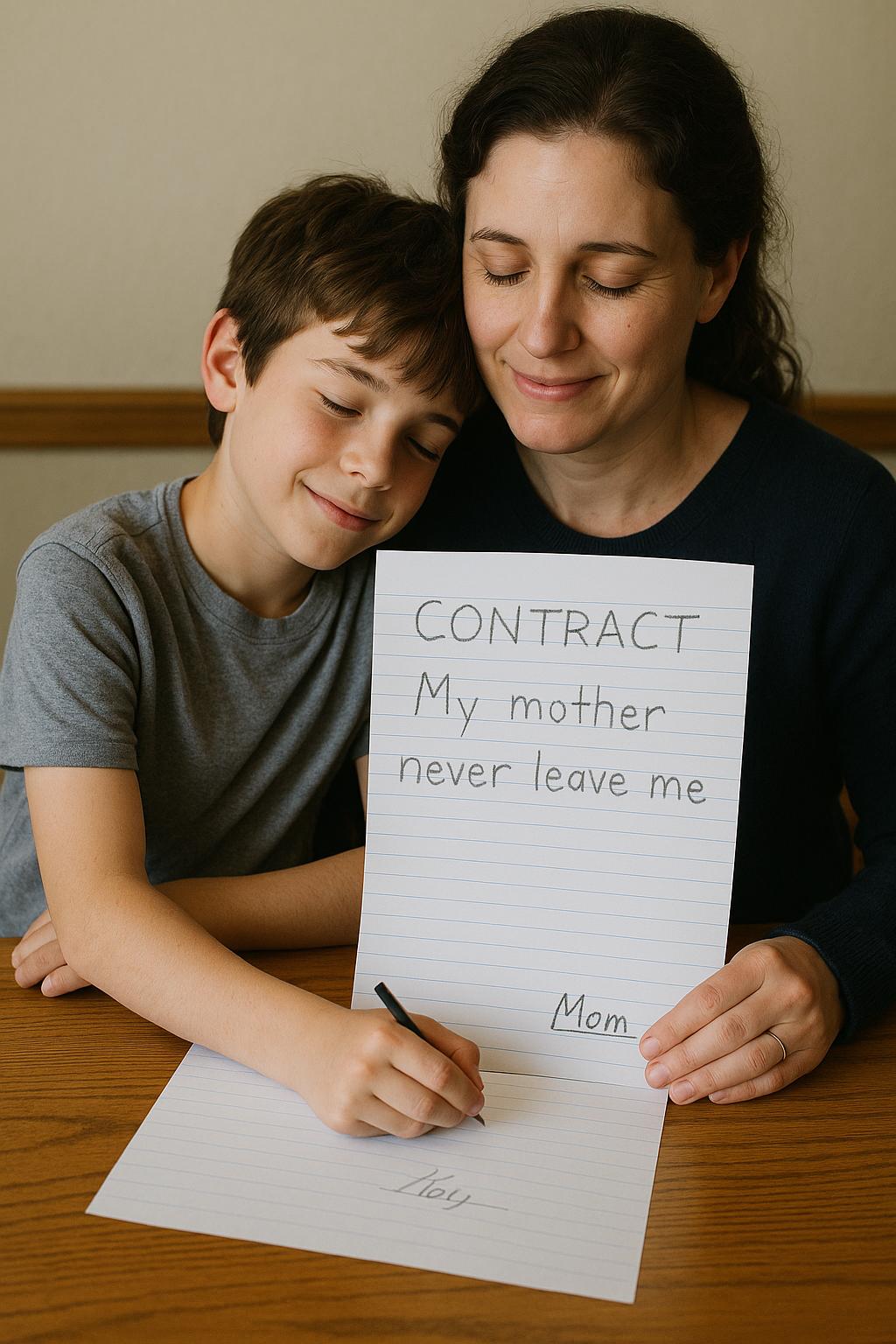
So, with the seriousness only a ten-year-old boy can muster, I sat down and drafted the most important legal document of my young life: a contract stating that my mother would never leave me and that I could live with her for the rest of my life. I wrote it in pencil, of course. I signed my name in big crooked letters, leaving a long blank line for her signature. And I walked straight up to her and presented it like I was delivering a treaty between nations.
Without missing a beat—and probably with a smile she worked hard to hide—she signed it.
I didn’t realize it then, but that signature wasn’t a promise carved into stone. It was a mother’s quiet acknowledgment of a little boy’s love, a way of saying, “I’m here. I’m yours. For now, this is your world.”
Funny how life changes.
As I grew older, that contract faded into a childhood memory, tucked somewhere between my old baseball cards and school photos. I outgrew that little-boy attachment, just like we’re supposed to. I fell in love, built a life, raised a family of my own. My wife became my home, my partner, the woman I clung to the way a man should—as an equal, a companion, not a parent-shaped safety net.
But mothers have long memories, especially when it comes to the sweetness of their children. Every so often, when I got busy with work or didn’t visit as often as she wanted, she would bring up that contract.
“You broke our agreement,” she’d say with a playful smirk. “You promised you’d live with me forever.”
She never meant it seriously. It was her way of poking fun, teasing me, reminding me of that deep bond we had when I was small enough to believe I could hold her forever. And I would laugh, shake my head, and tell her that a ten-year-old writing contracts probably wouldn’t hold up in court.
But the truth is, I loved that she remembered. I loved that it meant something to her. I loved that somewhere in her heart, that contract was still folded neatly, untouched by the passing years.
Looking back now, I see it for what it really was: the first contract I ever made out of love. Not the kind written on paper, but the kind etched into the soul. A boy’s devotion to his mother. A mother’s quiet grace in letting him grow up and walk away. And later in life, a man’s understanding that we’re meant to leave our parents and cleave to our spouse, building a new family while still honoring the old.
That childhood contract didn’t survive time—and it wasn’t supposed to. But the love behind it? That stayed. It just changed shape, softened, matured, and found its rightful place.
In the end, that’s what growing up really is: learning that love doesn’t need a signature to last.
Discover more from Beebop's
Subscribe to get the latest posts sent to your email.

 Beebop's