
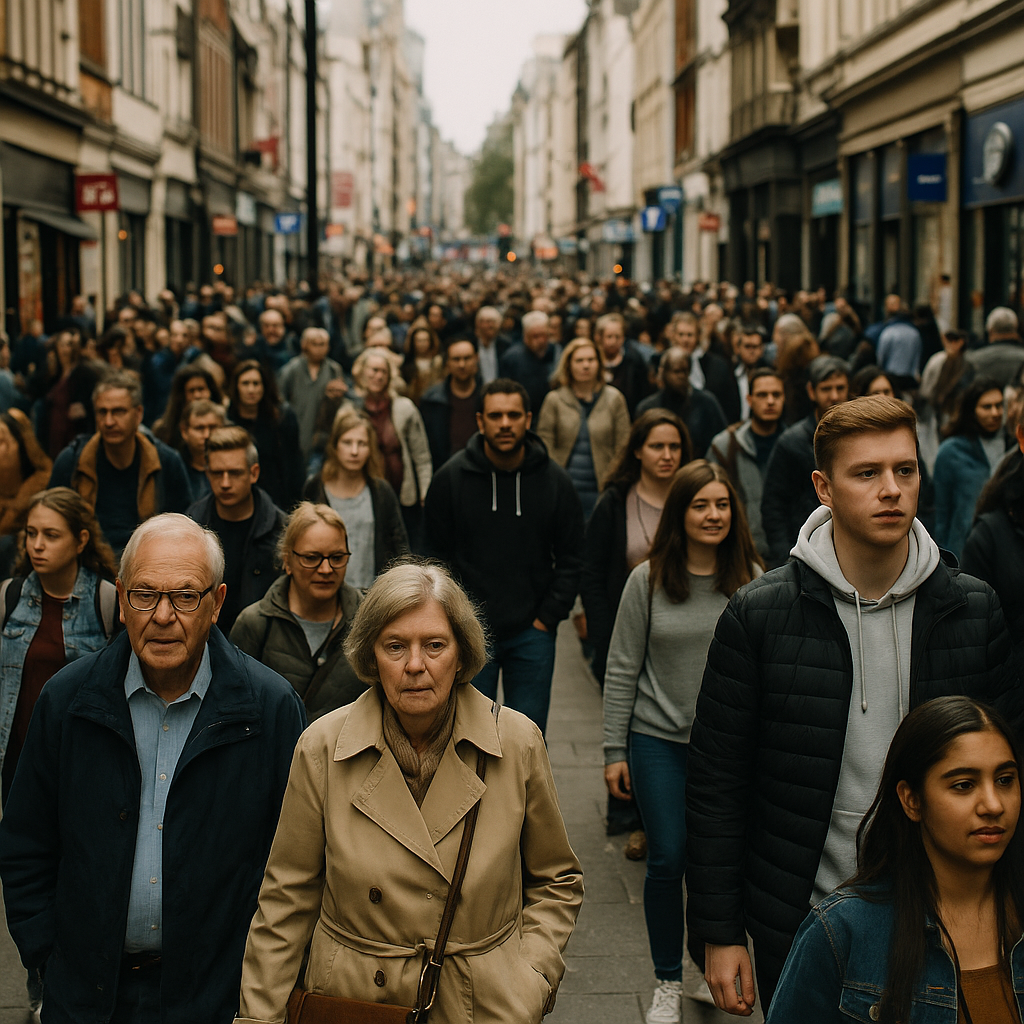
“In our time, the people have become so addicted to luxury that they do not marry, or if they do, they will rear no more than one or two children. This evil grew upon us so rapidly that the land ceased to yield its fruits.”
— Polybius, Histories (Book 37) written 145 BC
Birth control, lifestyle choices, and the termination of pregnancies all reduce the number of children brought into the world. That’s a biological reality, not a political statement. What concerns me today is the broader cultural shift in many developed nations where people are encouraged to prioritize careers, lifestyle freedom, and personal ambitions ahead of starting a family. When this mindset becomes widespread, the long-term result is a steady decline in native-born fertility.
In places like the United Kingdom, native-born Britons now have one of the lowest birth rates in their history. A significant portion of pregnancies among this group end in termination, and combined with delayed family formation and fewer total births, the native-born population is well below replacement level. When a population consistently produces fewer children than needed to maintain its numbers, it naturally begins to shrink.
At that point, the only way a country avoids overall population decline is through immigration, which becomes the main source of growth. Many immigrant communities arrive with different fertility patterns—typically having more children on average and experiencing far fewer terminated pregnancies. Over 20 or 30 years, these mathematical differences reshape the demographic balance simply because one population is growing and the other is not.
None of this is political.
It is demographic arithmetic.
But numbers alone don’t shape a nation’s future. Culture and assimilation matter just as much.
Throughout history, when new groups enter a country, the long-term outcome depends on how fully they assimilate into the traditions, values, and identity of the society they join. When assimilation is strong, cultural continuity is maintained even as populations shift. But when assimilation is weaker or inconsistent—and the native-born population is shrinking—the overall cultural character gradually begins to change.
History offers two clear examples of this pattern.
The transformation of Anatolia is one of the most documented cases. For centuries, the region was overwhelmingly Greek-speaking and culturally Byzantine. As the native population declined through war, economic strain, and low fertility, large numbers of Turkic groups migrated into the area. These groups maintained higher birth rates and held to their distinct cultural practices. Assimilation flowed slowly, and over several generations, the demographic balance shifted. The region gradually transformed from Byzantine Greek to Turkish in both identity and language.
A similar pattern occurred during the later centuries of the Roman Empire. Roman birth rates fell sharply, and writers of the time expressed concern about declining family formation. At the same time, Rome increasingly relied on incoming populations—many of whom maintained their own customs and leadership structures. As native Romans reproduced less and immigration rose, the demographic makeup changed. Assimilation was incomplete, and over time, the cultural and political identity of Western Rome transitioned into the Germanic kingdoms that defined medieval Europe.
Both cases demonstrate the same point:
When a native population declines, when incoming groups grow faster, and when assimilation is incomplete, the identity of a nation naturally evolves into something different from what it once was.
This is not about blame or preference.
It is simply the interaction of population trends and cultural behavior over time.
A country that does not replace its population—and does not encourage assimilation—will inevitably take on a new cultural identity. History shows this again and again. Understanding these patterns matters because they reveal how nations change, not suddenly, but gradually—through choices made over generations.
Discover more from Beebop's
Subscribe to get the latest posts sent to your email.

 Beebop's