


Do I Ever See Wild Animals? Oh Yeah —
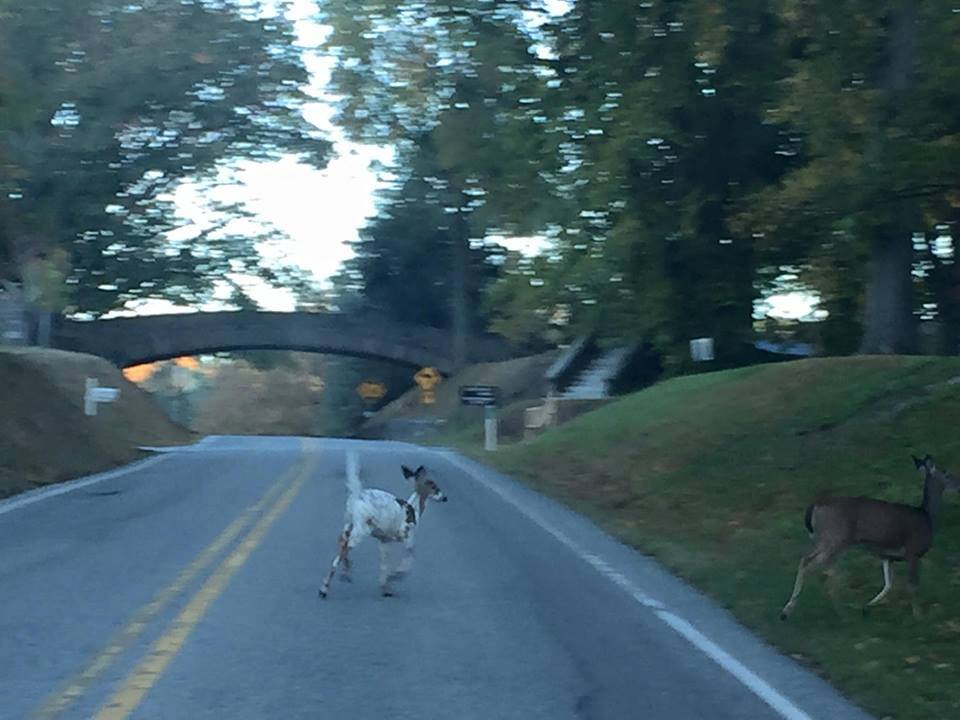
People always ask, “Do you ever see wild animals where you live?”
Oh yeah. Do I ever.
Living in the Philadelphia suburbs, especially in a wooded section like mine, you quickly learn you’re not the only one calling this place home. Some days I honestly feel like I’m just passing through their neighborhood.
The biggest population by far? White-tailed deer. They’re everywhere. I’ve seen a herd as large as thirteen at one time standing right on my front lawn — no exaggeration. They wander through like they’re inspecting their real estate holdings.
Then there are the squirrels — and around here you get the full variety pack. I see brown squirrels daily, and every so often a black squirrel shows up like the rare limited-edition version nobody else has. Foxes slip by at dusk with that sly, “don’t mind me” attitude. I’ve seen coyotes trotting along the tree line like they’re late for an appointment. Raccoons show up at night acting like tiny masked burglars. Chipmunks, groundhogs, skunks, rabbits — the whole crew rotates through.
And here’s something most people don’t realize: in the late 19th and early 20th century, there was actual fox hunting around here. Horses, hounds, the whole dramatic scene. So when a fox trots quietly through my yard today, I can’t help but think about how much history is built into that little animal. A hundred years ago they were being chased across these same woods and fields, and now they move through suburbia like retired celebrities who know all the shortcuts.
And the birds… this area is a paradise for them. Cardinals and blue jays bring the color, robins and finches hop around the yard like they own it, and sparrows seem to be everywhere at once. I get mourning doves (turtle doves) cooing softly in the early hours, but interestingly enough, never pigeons — not out here in the woods. I see nuthatches walking down the trees, wrens, chickadees, and titmice zipping around like they’re late for an appointment.
Then you’ve got the big personalities: hawks, osprey when I’m near open water, and the occasional eagle drifting overhead like they’re inspecting the whole neighborhood. Owls take over at night — you hear them long before you ever see them. Pileated woodpeckers sound like someone swinging a hammer inside a hollow tree.
In the summer, I get hummingbirds darting in and out, moving so fast you barely see them until they’re gone again. And in the fields and ponds? Red-winged blackbirds, grackles, geese, and ducks doing their usual slow march across the grass like a board meeting in progress.
Down near the water, I’ve run into snapping turtles, fish, and those little crawfish that shoot backward into the mud like they’re diving into a bank vault.
And then there’s the tiny wildlife — the ones that show up whether you invited them or not. Fireflies lighting up summer nights, dragonflies patrolling the yard, bees, wasps, butterflies, moths, grasshoppers, crickets, and cicadas buzzing away. And of course the mosquitoes, ticks, gnats, and flies that act like they pay rent around here.
Flip over a rock or rake some leaves and you get the bonus round: centipedes, millipedes, beetles, spiders, and earthworms just doing their thing.
I’ve lived here long enough to realize the suburbs aren’t nearly as tame as people think. Out here, nature isn’t something you drive to see — it shows up in your yard every single day whether you’re expecting it or not.
So yes, I see wild animals.
Honestly? I see so many I sometimes think I should start charging admission.
Discover more from Beebop's
Subscribe to get the latest posts sent to your email.

 Beebop's
Hummingbirds…… then I looked at latitudes and I see you’re on 39.95° N …. Tropical! I saw a hummingbird once on Aruba….magic.
LikeLiked by 2 people
Climate Characteristics at That Latitude
Hot, humid summers
Temps often reach the 80s and 90s with high humidity.
Cold winters
Regular freezes, snowstorms, and occasional Nor’easters.
Four distinct seasons
Big swings between summer heat, brilliant fall, cold winters, and warm springs.
Moderate to high precipitation year-round
No true dry season.
LikeLiked by 1 person