


What cities do I want to visit?
Another one of those WordPress prompts that sounds simple but never really is. I’ve learned over time that most people don’t care about a random list of places I’d like to see. What does matter is whether they walk away knowing something they didn’t know five minutes earlier.
So instead of rattling off destinations, I’ll do this the only way I know how — by taking you somewhere that feels familiar and foreign at the same time.
Let me take you north. Just far enough that things change.
Canada’s Capital — And a Little Slice of Europe
If you want the most European experience you can get without crossing an ocean, the answer sits quietly above New York State: Ottawa and Quebec City.
Ottawa, the capital of Canada, doesn’t shout for attention. It doesn’t need to. It has that old-world confidence where tradition and function live side by side. Parliament Hill rises above the Ottawa River, a broad, slow-moving body of water that feels more like something you’d expect to see in Europe than North America.
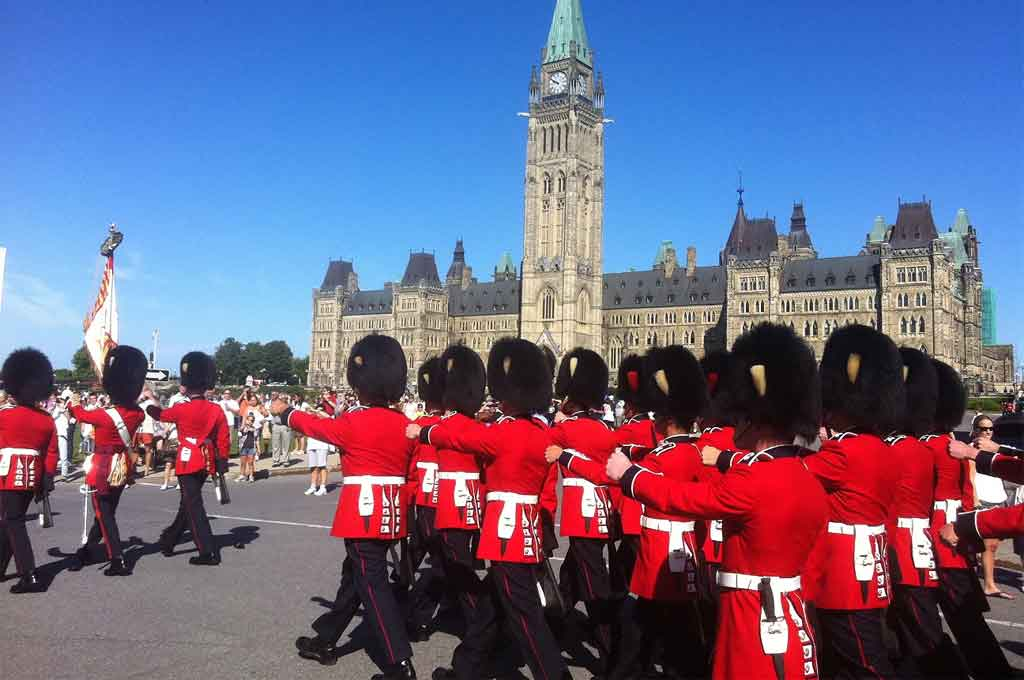
In the summer months, you can stand on the lawn and watch the Changing of the Guard, complete with ceremonial uniforms and precision timing. It’s Canada’s version of London — not a copy, but clearly inspired by the same respect for history and continuity. It reminds you that countries are built on rituals as much as laws.
Across the street from Parliament sits one of the most photographed buildings in the country: Château Laurier. It looks like a medieval castle because, in many ways, that was the point. It’s a grand railway hotel from the early 1900s, built when travel itself was an event. Today, it still functions as a hotel, and even if you don’t stay there, walking through the lobby feels like stepping back into a time when architecture was meant to impress, not disappear.
Ottawa also delivers culture quietly. World-class museums — the National Gallery of Canada, the Canadian Museum of History — sit within walking distance of each other, connected by paths, bridges, and views of the river. It’s a city built for walking, thinking, and slowing down.
Quebec City — Where North America Ends and Europe Begins
Then you go east.
And everything changes.
Quebec City feels like it was accidentally dropped into North America from another century. French is the primary language. Street signs, menus, conversations — they all remind you that this place followed a very different historical path.
The heart of the city, Old Quebec, is a UNESCO World Heritage site, and it earns that title. Narrow cobblestone streets, stone buildings, artists selling their work in small squares, cafés tucked into corners — this is not something recreated for tourists. It’s real, lived-in history.
Towering over it all is Château Frontenac, another castle that’s actually a hotel, perched dramatically above the St. Lawrence River. If Château Laurier feels regal, Frontenac feels cinematic. It dominates the skyline the way European castles dominate old river towns — because that’s exactly what Quebec City was designed to be.
Double-decker buses roll through the city offering guided tours, which sounds touristy until you realize how much ground there is to cover. From fortified city walls to museums, art districts, and river overlooks, Quebec City rewards curiosity. The St. Lawrence River, wide and powerful, connects the city to the Atlantic and explains everything about why this place mattered so much historically.
Why This Answer Actually Matters
I don’t want to visit these cities because I need another stamp in a passport.
I want to visit them because they prove something important: you don’t have to go far to experience how history, culture, language, and tradition shape the way people live. Ottawa and Quebec City show how Europe’s influence didn’t stop at the Atlantic — it adapted, evolved, and survived right here on this continent.
That’s the part worth sharing.
Not the destination — but the perspective you bring back with you.
Discover more from Beebop's
Subscribe to get the latest posts sent to your email.

 Beebop's