
“The middle class is the backbone of our economy.”
— Barack Obama
I remember asking my dad what was the difference between Republicans and Democrats when I was little back in the 1960’s and his answer was Republicans are for the rich and business and Democrats are for the workers and middle class like us. I’ve been thinking a lot about why so many very wealthy people today lean left politically. What makes it interesting is that nearly all of their wealth exists because of the capitalist system we live in — the same system that once produced the most massive, stable middle class in the world. For most of our country’s history, the middle class represented the majority of Americans. Today, it doesn’t. The rich and the poor combined now make up more than half of the population, and that shift didn’t happen by accident. It happened because of specific policy decisions that changed how money is made, how wages are set, and who gets protected when things get tight.
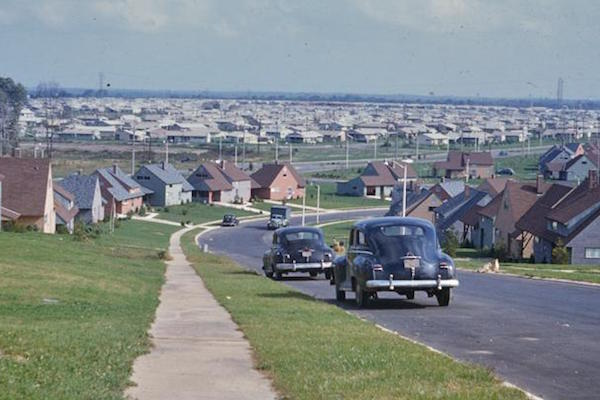
The American middle class reached its high-water mark roughly between the end of World War II and the late 1970s, when nearly two-thirds of the country fell into that category. One income often supported a family, home ownership was attainable, and upward mobility was expected, not hoped for.
What changed wasn’t capitalism itself, but the rules around it. Companies were allowed to move production overseas with little consequence, which weakened domestic manufacturing and wage leverage. Immigration and labor participation expanded faster than job quality and wage growth, increasing competition for the same roles. Wall Street grew more profitable than Main Street, rewarding stock ownership and debt-driven growth instead of long-term employment. At the same time, the tax burden gradually shifted toward wages and consumption, while investment income and large assets received more favorable treatment. The result was predictable: people who lived on work fell behind, people who lived on assets pulled ahead, and the middle slowly thinned out.
Most wealthy people don’t live on wages. Their money sits in the stock market, private businesses, real estate, or companies that employ large numbers of people. To them, wages aren’t income — they’re an expense. When the labor pool grows faster than the number of good-paying jobs, wage growth slows down because workers have more competition. Slower wage growth means lower operating costs for businesses, higher profit margins, and better numbers for shareholders. That’s not political theory. That’s basic economics.
Add in large social programs and you get a second layer of protection. I’m talking about programs that keep people fed, housed, and medically treated when they’re struggling. Those programs can be humane and necessary — but they also serve another function: they reduce pressure on the system without fixing the reasons people fell behind in the first place. The poor get enough to survive. The middle class pays most of the bill through taxes and inflation. The wealthy stay insulated and still benefit from higher profits and rising asset values.
And insulation is the key word. A lot of wealthy people are simply not exposed to the day-to-day consequences of policies they publicly support. They don’t deal with overcrowded schools, strained emergency rooms, rising rents, or neighborhoods changing overnight because demand for housing outpaces supply. They don’t ride public transportation systems where disorder is felt first. They don’t live in the areas where drug trafficking, street crime, and quality-of-life issues hit hardest. They live in protected neighborhoods, gated communities, and towns with strong policing and private security. So for them, a lot of these issues stay theoretical — something you read about, not something you live with.
None of this is anti-immigrant. People respond rationally to incentives. The failure isn’t human — it’s policy. A country can be welcoming without being reckless. Borders don’t have to be closed, and they don’t have to be wide open. They have to be controlled, paced, and enforced. That means deciding the number of people we can absorb each year based on realities like housing supply, school capacity, hospital capacity, infrastructure, and whether wages are rising for American workers. It also means enforcing the laws on the books so employers can’t use illegal labor as a tool to undercut wages and working conditions.
At the same time, we should be doing far more to protect the middle and upper-middle class — the engine that actually funds the system. That means laws that protect wages, enforce labor standards, preserve skilled careers, and stop turning stable full-time jobs that can support a family into contract work, gig employment without benefits, or roles that don’t even earn reliable Social Security credits — all for the sole purpose of lowering labor costs and boosting stock prices or dividends.
We also need tax policy that encourages the things that actually stabilize a society: home ownership, intact families, and a healthy birth rate. Right now, the system rewards asset speculation more than it rewards building a stable life. We should be making it easier for people to buy and keep a primary residence, harder for investors to crowd out first-time buyers, and more affordable for families to raise kids without feeling like they’re signing up for financial punishment.
If we’re serious about reducing inequality, we have to stop pretending trade-offs don’t exist. Policies that expand the labor pool without wage protection, grow the population faster than housing and infrastructure, and patch things with endless programs instead of fixing the structure don’t reduce wealth concentration. They manage the symptoms while the middle keeps shrinking.
A country doesn’t stay strong by growing the rich and managing the poor. It stays strong by rebuilding the middle that made everything else possible.
Discover more from Beebop's
Subscribe to get the latest posts sent to your email.

 Beebop's