

History always repeats itself
I’m an Italian American who lived through the end of the Mafia era in the Northeast. My father and grandfather were still alive, so this isn’t something I learned from history books. It was part of growing up and part of everyday life in neighborhoods filled with hardworking imigrant Italian families who simply wanted stability and opportunity.
For decades, organized crime cast a long shadow over Italian communities. The Mafia raised prices, extorted honest business owners, trafficked illegal narcotics, controlled prostitution, ran illegal gambling and loan-sharking operations, crushed competition, intimidated witnesses, and injected fear into places that should have felt safe. And even though the vast majority of Italian Americans had nothing to do with it, that criminal element created a stigma that followed all of us.
My family wanted no part of it. Like most Italian Americans, we worked, Paid our taxes, paid our bills, and raised our kids. When the federal government finally dismantled organized crime in the 1980s and 1990s, we didn’t protest or claim victimhood. We quietly supported it. We understood that holding criminals accountable was the only way to separate our families, our culture, and our future from people who never represented us in the first place.
When I was young, nobody pretended the Mafia didn’t exist. Nobody claimed that calling it out was anti-Italian. Ignoring it would only have guaranteed that the stigma stayed with us. The only way forward was honesty and clear lines.
That doesn’t mean there weren’t attempts to confuse the issue. During that time, organized crime figures tried to shield themselves behind civil rights language through groups like the Italian-American Civil Rights League, which emerged largely as a response to growing law-enforcement pressure. It claimed to speak for Italian Americans, but most families saw through it. It wasn’t about protecting ordinary people. It was about protecting criminals. And because of that, it never gained real support from the broader public.
Calling out the Mafia wasn’t prejudice. It was liberation.
That experience shapes how I see what’s happening today.
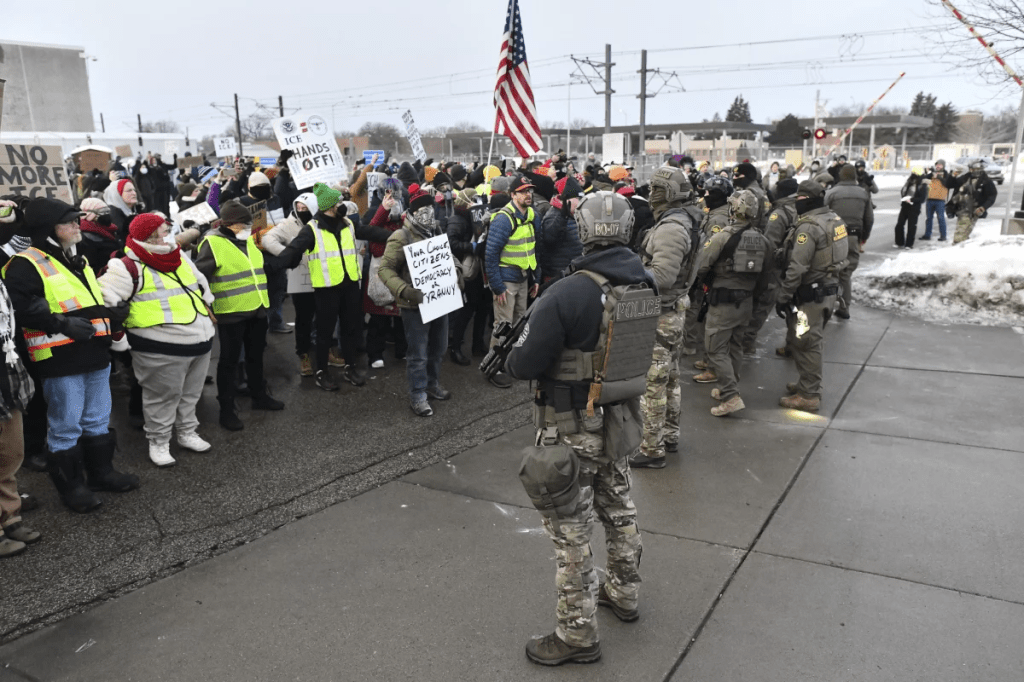
In many cities, enforcement efforts aimed at people who are in the country illegally and who already have criminal records, deportation orders, or documented gang ties are being portrayed as attacks on entire communities. The critical distinction between law-abiding families and criminal elements is often lost. When that line disappears, it doesn’t protect innocent people. It puts them at greater risk of being unfairly associated with behavior they reject. It divides our country.
There’s also a familiar pattern in how public reaction is being shaped now. Many modern protests are not always driven by the neighborhoods most affected by crime. Reporting has shown that some demonstrations are influenced by outside activist groups and professional organizers, with participants who don’t live in the communities they claim to represent. The focus shifts away from everyday families and toward confrontation, slogans, and narratives that oversimplify a complex reality. You can be sure these outside activist groups do not have the countires best interest in mind.
I’ve seen how this plays out before. Italian Americans didn’t move forward by denying reality or defending criminals. We moved forward by drawing clear lines and supporting accountability. That clarity reduced stigma instead of reinforcing it.
We are at a critical moment in this country. Lines are being drawn in the sand, whether we like it or not. If there is any hope that our nation lasts another 250 years, we need to be careful not to form conclusions based solely on headlines, social media clips, AI fakes, or what’s trending online. Leadership requires judgment, context, and the courage to tell the difference between appearance and reality.
Protecting honest, hardworking Hispanic families — just as protecting Italian families before them — means refusing to let criminal elements define an entire community. My family built a rich future in this country because accountability mattered and lines were clearly drawn. I want the same future for the millions of Hispanic Americans who are working hard, raising families, and believing in the promise of this nation.
That future depends on clarity, fairness, and being willing to stand on the right side of the line when it matters most.
Discover more from Beebop's
Subscribe to get the latest posts sent to your email.

 Beebop's