
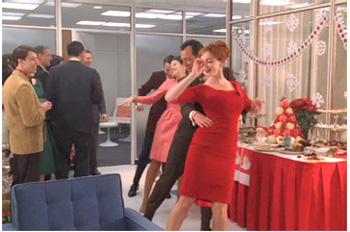
We’ve reached a point in this country where men’s behavior toward women from decades ago is being judged as if it happened under today’s rules, and that’s a mistake.
There is a critical difference between criminal behavior and the flawed, often ugly behavior that existed in a very different cultural time. When we collapse everything into a single category, we don’t get justice—we lose clarity.
What Jeffrey Epstein did was illegal, predatory, and criminal—full stop. There is no debate, no context, and no historical excuse that applies. Men or women who had sex with, groomed, or exploited minors—whether connected to Epstein or not—should be in prison. Minors are off-limits in every era, every culture, and every moral system. That has always been true, and it always must be.
But that is not the same thing as powerful men pursuing adult women in an era when power, money, status, and sex were openly intertwined—often blatantly so. From the 1960s through the late 1990s, corporate America, politics, media, and entertainment operated in social environments that were informal, alcohol-heavy, and male-dominated. Business was done after hours. Promotions were influenced by social access. Lines that are rigid today were loose then—and everyone in the room knew it.
I didn’t read about this in a book. I watched it with my own eyes.
Corporate parties were a world unto themselves. Alcohol flowed freely. Boundaries blurred quickly. And I saw women behave in ways that would be very hard to explain—or defend—in today’s environment. Not coerced. Not forced. But fully aware of the game being played. Attention was currency. Sexuality was leverage. This wasn’t hidden behavior. It was cultural reality.
And here’s the part people don’t like to admit: the system punished anyone who didn’t play along.
I was one of them.
I never drank alcohol. I never got “crazy” at company parties. I went home early. I didn’t flirt. I didn’t play the backroom politics. Because of that, I was never fully accepted by the powerful men in the company, and my career suffered for it. I wasn’t part of the club. I didn’t bond the right way. I didn’t belong.
The same thing happened to women—only worse.
The women who didn’t “play the game” paid a price. The ones who dressed plainly. The ones who didn’t wear makeup. The smart, capable, unflashy women—the plain-but-brilliant Janes—were invisible. In an era when appearance and social compliance were quietly rewarded, competence alone wasn’t enough. They didn’t get promoted. They didn’t get invited into the inner circle.
I remember this vividly: I once recommended a woman who worked for me for a promotion. She was overqualified for the role—smart, reliable, professional. She dressed plainly and wasn’t conventionally attractive. I was reprimanded—not subtly, but directly—for even suggesting her. Not because she lacked ability, but because she didn’t “fit.” That was the word used. Fit.
That’s not rumor. That’s not speculation. That’s how things were.
For much of the 20th century—especially in business, politics, entertainment, and media—the rules were different. Not better. Different. Power dynamics were obvious, unspoken, and widely accepted. Men chased women. Aggressively. Often crudely. Often selfishly. And yes, many crossed lines that today would—and should—end careers.
And many women, whether by ambition, calculation, survival, or opportunity, knowingly participated in that system. Not all. Not most. But enough that pretending otherwise turns history into fiction.
None of this makes exploitation noble. It explains why it was normalized.
You cannot go back decades and retroactively apply today’s standards as if everyone back then lived by the same cultural rules we do now. That isn’t justice. That’s historical revisionism.
If we’re being honest—and honesty matters—there aren’t enough jails in the world to lock up every powerful man from those decades who used his position to pursue sex with adult women. CEOs, Bosses, politicians, lawyers, producers, financiers—you’d empty boardrooms and governments overnight. That doesn’t mean we celebrate it. It means we acknowledge reality.
Men are men. Men chase women. Testosterone is real. Power amplifies behavior. When consequences are absent, behavior expands. That truth didn’t begin in the modern era, and it didn’t end with #MeToo.
What changed wasn’t the past. What changed is the present. Women gained leverage. Culture shifted. Tolerance collapsed. And that is a good thing. Today’s leaders should be held to today’s standards—clearly, firmly, and without apology.
But conflating adult, consensual—even if morally uncomfortable—behavior from another era with outright criminal abuse of minors is dangerous. It muddies real evil. It weakens real accountability. And it replaces understanding with outrage.
And we can say, without hesitation, that any powerful man or woman who had sex with, groomed, or exploited a minor—whether connected to Epstein or not—should be in prison, full stop. There is no ambiguity there. But adult men pursuing or engaging in sexual activity with other consenting adults, even within Epstein’s orbit, is a very different matter. Conflating the two doesn’t strengthen justice—it weakens it by erasing critical moral and legal distinctions.
What I am saying is not victim-blaming, but historical reality: many women at the time accepted the way things were, operating within a system they understood, where options such as quitting, reporting to human resources, or filing a criminal complaint existed but were often seen as career-ending choices.
We can condemn behavior without pretending the past was the present.
We can protect victims without rewriting reality.
Progress isn’t pretending history was clean.
Progress is understanding it well enough not to repeat it.
Discover more from Beebop's
Subscribe to get the latest posts sent to your email.

 Beebop's