


“Keep the best, sell the rest, and never waste time teaching those who don’t want to learn.”
People ask me all the time how I got started buying and selling things. They usually expect some romantic story about antiques, or that I was “always a collector,” or that I had some big master plan.
The truth is a lot simpler than that.
I needed the money.
I grew up in a world where there were no “gig jobs.” No eBay. No Amazon. No Facebook Marketplace. No apps where you could take a photo, post something, and have a buyer message you within five minutes.
Back then, you had a job… and if you needed extra income, you did what people used to call moonlighting a second job. You worked a second job. You took side work. You found a hustle.
When I first got married in 1979, I was making about $9,500 a year as a department manager at a local discount store. That sounds laughable today, but even adjusting for inflation, it wasn’t exactly living large. Owning a home, having new baby and stay at home Mom money was very tight. The country was in a recession, our interest rate for our home was 16%, gas & oil prices were high, and like most young couples, we were trying to build a life without much of a safety net.
So I did what a lot of guys did back then. I started taking side jobs.
I put an ad in the local free classifieds offering bathroom tile restoration and caulking. It was work I had learned years earlier while working at an apartment complex. The jobs paid decent—maybe $200 to $500 a pop—and for a while it helped.
But I’ll be honest: I hated it.
It was messy. It was unpredictable. And working in other people’s homes always felt risky. One wrong move, one cracked tile, one unhappy homeowner, and suddenly that “easy side money” becomes a headache you don’t need.
So I started looking for a better way.
That’s when I remembered something that had been sitting in the back of my mind for years.
My Uncle John and Aunt Bea were antique dealers.
They were the kind of people who always had stories. They’d come to family gatherings talking about what they found, where they found it, what it was worth, and how some dusty old object turned into real money. They had antique books filled with pictures and notes, and it was clear they lived in a completely different world—one where knowledge itself was a kind of currency.
But here’s the thing…
Back then, if you wanted to get into antiques, you couldn’t just “Google it.”
There was no internet.
No YouTube.
No forums.
No online price guides.
And definitely no ChatGPT.
If you wanted to learn the antique business, you had to earn it the hard way.
You had to go to auctions.
Hang around flea markets.
Listen carefully to dealers who didn’t want you listening.
Make mistakes.
Buy junk.
Overpay.
Learn what mattered.
Learn what didn’t.
And antique dealers were notorious for guarding information like it was classified government material.
They had a saying back then that always made me laugh:
“Don’t train the dummies.”
Translation: Why would I teach you what I know, when you might become my competition?
Still, the idea of buying something cheap and selling it for more lit a fire in me. It wasn’t even the antiques themselves that grabbed me.
It was the thrill of the deal.
I liked the idea of turning something overlooked into something valuable. That was the hook.
Then one Thanksgiving, my uncle took me down into his basement in Philadelphia and showed me what he had been collecting.
He was pulling items off shelves like a magician doing card tricks.
And every time he’d show me something, he’d say:
“Do you know where I got this?”
And then he’d smile and say the same thing over and over:
“I found it in the trash.”
I’m telling you, something clicked in my brain right then.
Because suddenly I realized something important:
If people were throwing out items that had real value… then the world was basically full of free inventory.
And I didn’t need money to start.
I just needed time, curiosity, and a strong back.
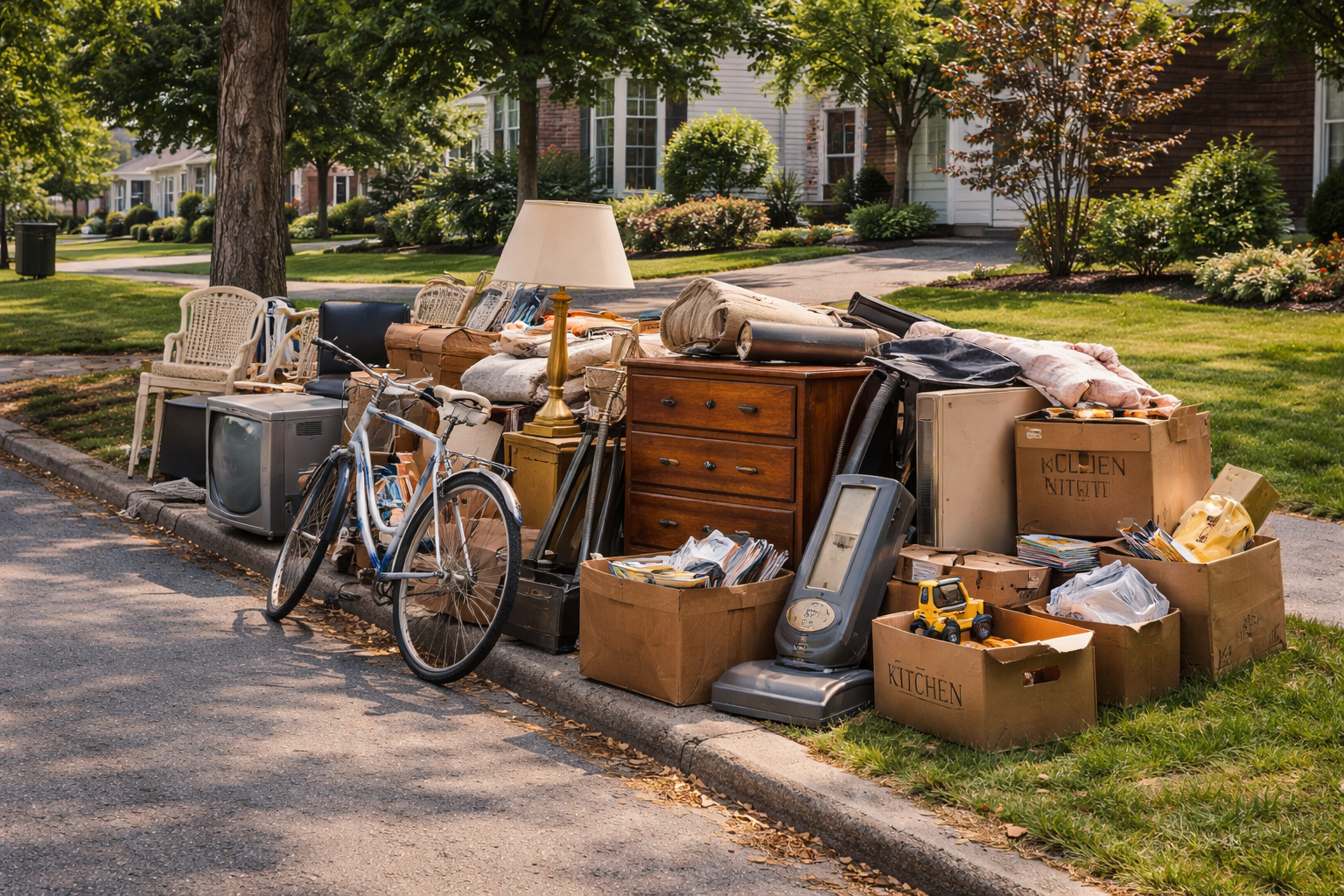
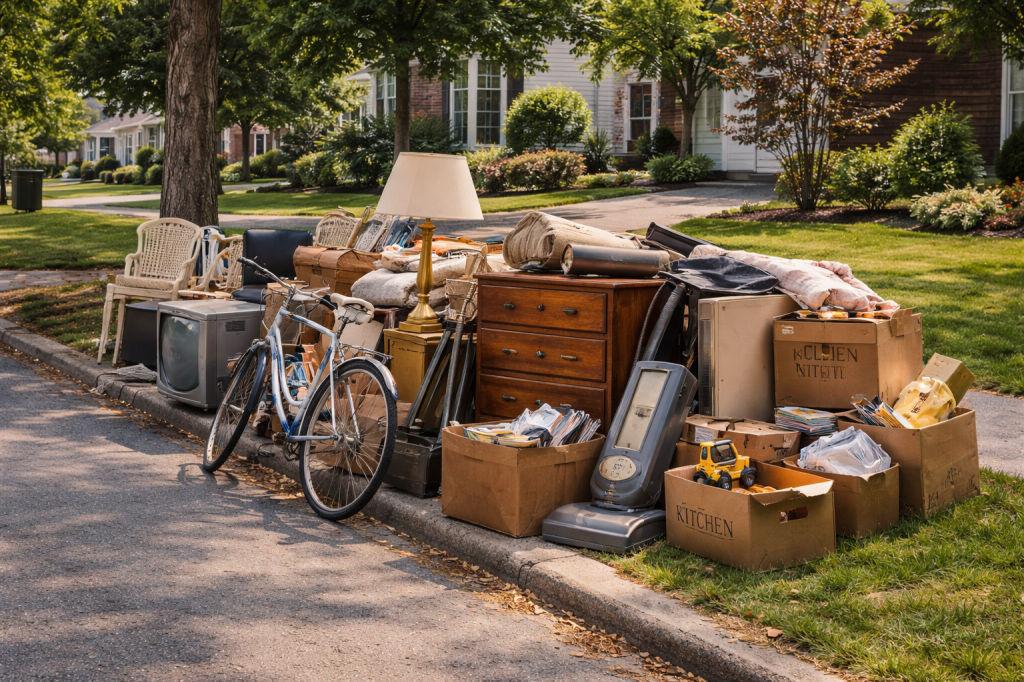
The next trash day, I removed the back seat from my car—an old Ford—and I went out hunting like a man on a mission. I was so excited I could barely sleep the night before.
I grabbed a flashlight and headed straight for the nicer neighborhoods around Upper Darby, especially the areas near School Lane and Upper Darby High School.
I wasn’t looking for antiques.
I was looking for anything I could sell.
And what I found that first day blew my mind.
Bikes.
Vacuum cleaners.
Snow tires.
Furniture.
Household items.
Artwork.
Random tools.
Good stuff—stuff that people today would fight over on Marketplace.
And it was all sitting there at the curb like it was nothing.
I made three trips home that day.
Three.
I’d bring things back, clean them up, fix what I could, and then sell them. I started advertising in a free classified newspaper called The Penny Pincher, and before long I was bringing in an extra $500 to $800 a month.
That was real money back then.
That wasn’t “fun money.” That was mortgage money. Grocery money. Life money.
And the funny part is, I didn’t feel like I was working.
I felt like I was treasure hunting.
Now sure, there were moments where people looked at me like I was crazy. And I’ll admit, it wasn’t always glamorous. You’re not exactly cruising the neighborhood feeling like a Wall Street investor when you’re pulling a chair out of someone’s trash pile.
But the results spoke for themselves.
And once you start finding real value where other people see garbage… it changes how you look at everything.
One of my best finds ever was an antique Waterford crystal chandelier sitting right on top of a trash can in Upper Darby.
Just sitting there.
Like someone tossed it out without thinking.
I grabbed it, cleaned it up, and eventually sold it for $2,600. $2,600 in 1980 would have roughly the same purchasing power today (2026) as about $10,000 in today’s dollars.
That was the moment I got hooked for life.
Because that wasn’t luck.
That was proof.
Proof that hidden value is everywhere, and most people walk right past it every day.
Over time, as I learned more, I started moving away from pure “trash picking” and began buying items specifically to resell. That’s when the antique side of the business really started to take shape.
Then eBay came along.
And I’ll tell you right now—eBay was a revolution.
I was one of the early sellers back in 1999, and it changed the game completely. Suddenly you weren’t limited to selling locally. You could sell to the entire country. The entire world. You could find the exact buyer for the exact item, no matter how weird or obscure it was.
The first thing I ever sold on eBay was a Coke bottle for $8.
Nothing fancy.
But I still remember it because it was the start of something bigger. At first, I had a rule: I wouldn’t spend more than one dollar on anything I planned to flip.
One dollar.
That was my comfort zone.
But like anything else, once you start learning, your confidence grows. You begin to recognize brands. You begin to spot quality. You start to understand what’s rare, what’s desirable, and what people will pay for.
And even today, I still slow down if I see something interesting on the curb.
Old habits die hard.
Some people golf.
Some people gamble.
Some people collect cars.
Me?
I like the thrill of finding treasure where nobody else is looking.
And over the years—between classified sales, flea markets, my store, eBay, and now Facebook Marketplace—I’ve sold well over a million dollars worth of “stuff.”
Not to mention all the money I saved by buying things for myself at a fraction of their retail value.
And honestly?
I still get the same rush today that I did back when I pulled that first vacuum cleaner out of a trash pile and thought, Are you kidding me? People throw this away?
Because once you’ve lived long enough to understand what things are really worth… you realize the world is full of opportunity.
You just have to be willing to stop the car and look.
Discover more from Beebop's
Subscribe to get the latest posts sent to your email.

 Beebop's