
It’s funny how people talk about “all the choices we have now.” We’ve got Netflix, Hulu, Prime, Apple TV, YouTube, Roku, and about twenty other streaming services that all want a monthly fee. We’ve got more channels than we ever had in our lives, and supposedly more movies than ever before. And yet somehow, I swear there are more great movies missing today than there were thirty years ago.
You ever have that moment where you suddenly remember a movie you loved? Not some obscure film school documentary either. A real movie. One you remember seeing on television over and over back in the day. Maybe it was a gritty crime movie from the 70’s like the french conection. Maybe a war movie. Maybe something with a young Steve McQueen or Robert De Niro or Al Pacino. Something that stuck with you. And you think to yourself, “I’m going to watch that again tonight.” Then you search it…and it’s nowhere.
Not on Netflix. Not on Prime. Not on Hulu. Not on Apple. Not even available to rent. It’s like the movie just vanished. And you sit there thinking: how is that possible? In a world where we supposedly have unlimited access to everything, how can a major motion picture disappear?
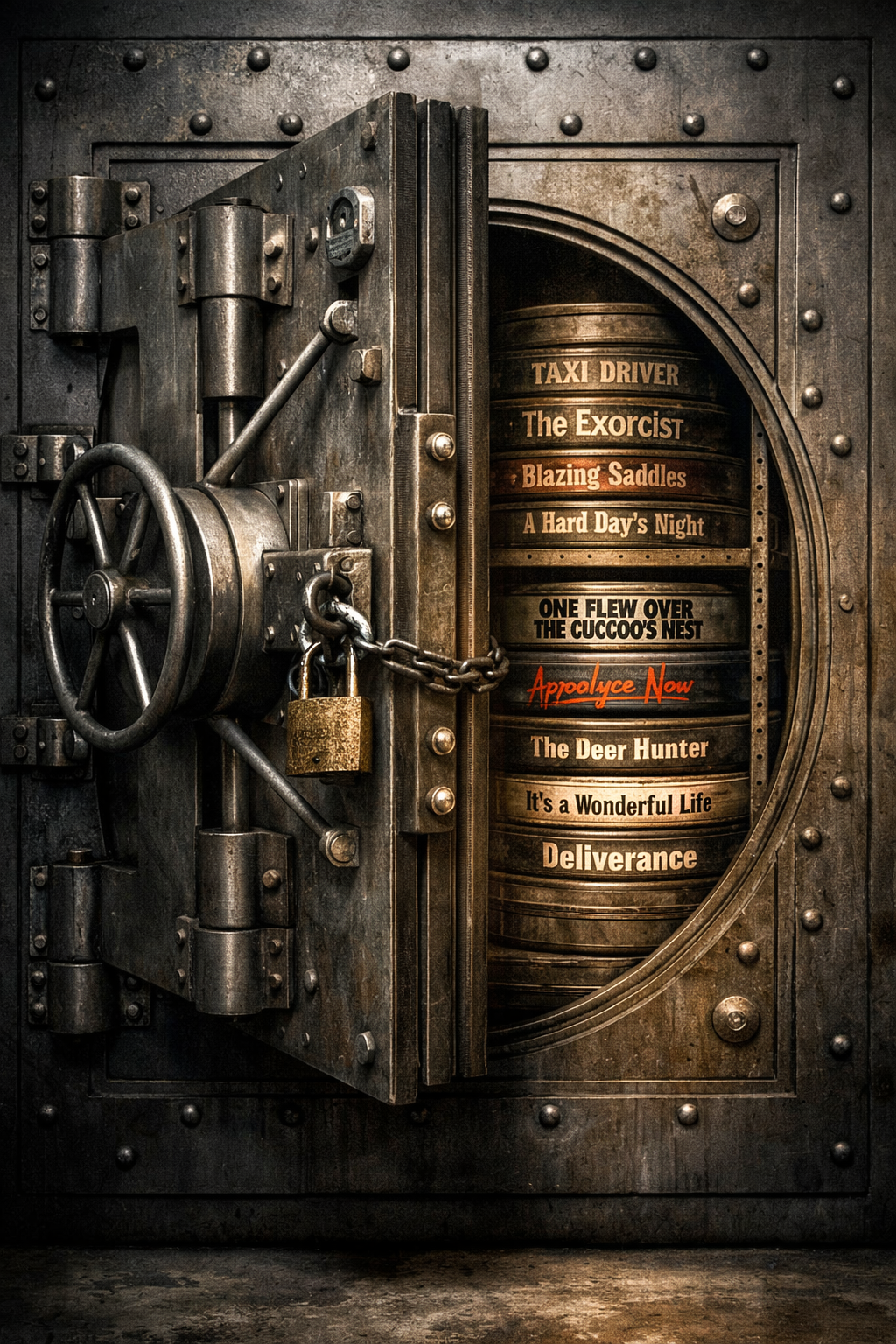
The answer is simple. Most people don’t realize that movies aren’t just “movies.” They’re property. They’re assets. They’re intellectual real estate. Somebody owns the rights, and whoever owns the rights gets to decide if you ever see it again. If they want to license it, they license it. If they don’t, you can forget about it.
Sometimes the rights situation is so tangled up that even the biggest streaming services don’t want to touch it. The original studio might have gone out of business. The rights might be split between a producer, a distributor, an investor group, and an estate. One person might own the U.S. rights, another might own international rights, and another might own television rights. If one of those parties refuses to sign off, the movie sits in a vault like a piece of buried treasure.
And then there’s the other huge reason nobody thinks about: music rights. Movies from the 60’s, 70’s, and 80’s used songs in ways that were perfectly legal at the time, but those contracts were written for theaters. Nobody was thinking about streaming. Nobody was thinking about DVDs. Nobody was thinking about a world where people would be watching the same film fifty years later on demand. So now, to put that movie back out there, the studio has to renegotiate the rights to every song. And if the record company wants a fortune? Forget it. The movie stays locked away.
That’s why you’ll sometimes see older movies re-released with different music. People don’t realize it, but they’ll watch a movie they remember and something feels “off.” The mood isn’t the same. The scenes don’t hit the same. That’s because the soundtrack that helped define the movie is gone, replaced by some generic filler music because it was cheaper.
And this doesn’t just happen to gritty crime films or edgy dramas. It even happens to wholesome classics. Movies like It’s a Wonderful Life used to be on every Christmas season, sometimes on multiple channels, like a tradition. Same with White Christmas. These were the kinds of movies you could count on seeing every year, even if you didn’t plan on it. You’d just be flipping through channels and there it was. Now, some years, they’re harder to find, or they’re locked behind a subscription, or they pop up in one place for a limited time and then disappear again.
And if you want a perfect example of how complicated all this gets, look at the Beatles movies that were made. Films like A Hard Day’s Night, Help!, Magical Mystery Tour, and even the animated Yellow Submarine are cultural treasures. But because of music rights, ownership rights, and corporate control, those movies have been in and out of circulation for decades. One year you can find them everywhere, the next year they’re missing, and people are scratching their heads wondering why you can’t watch a movie that should be considered a piece of history.
But there’s another reason some movies disappear, and this one is a little more uncomfortable. And the irony is, today’s movies are filled with graphic gun violence, horrifying gore, brutal crime scenes, and special effects that make everything look more real than ever. Yet somehow, in the middle of all that, we’ve become too sensitive for many of the movies that came out in the 70’s, 80’s, and 90’s. Movies that weren’t even trying to be offensive. Movies that were just honest, raw, and sometimes willing to laugh at themselves. Today, it feels like we can’t laugh at ourselves anymore, we can’t make fun of anyone, and we can’t tolerate stories that make us uncomfortable.
Some movies aren’t missing because of legal paperwork. They’re missing because the content is considered too gritty, too controversial, too politically incorrect, or too “dangerous” for modern audiences. In other words, they don’t fit the new world where everyone is terrified of being offended, and studios are terrified of being accused of “promoting” the wrong message.
Think about it. A movie like Dog Day Afternoon was raw and uncomfortable. It wasn’t designed to make you feel safe. It was designed to make you think. One Flew Over the Cuckoo’s Nest is another one. It’s one of the greatest films ever made, but it’s also dark, emotional, and disturbing. It’s not the kind of movie a company wants to slap their logo on today and take heat for on social media.
Then you’ve got Taxi Driver. That movie is practically a cultural landmark, but it’s also the kind of film that makes people squirm. Violence, mental breakdown, isolation, moral decay… it’s not “fun entertainment.” It’s uncomfortable truth. Same with The Deer Hunter. That movie didn’t just show war. It showed what war does to people. It’s brutal, emotional, and unforgettable. And honestly, it’s the kind of film that would probably have a warning label slapped on it today the size of a billboard. And then there’s The Exorcist, a movie so controversial when it came out that people were walking out of theaters, fainting, and protesting it. Even today, it’s still considered one of the most disturbing movies ever made, and it’s not something most networks want to casually run in prime time.
And that’s not even getting into movies like A Clockwork Orange. That one is so disturbing that even decades later people argue about whether it should be shown at all. Or Deliverance, which is a masterpiece, but also one of the most uncomfortable films ever made. Or Midnight Cowboy, which was considered shocking even back then. Or Apocalypse Now, which is pure cinematic genius, but it’s also madness on film. A lot of these movies were made in a time when filmmakers were allowed to take risks, push boundaries, and tell stories that weren’t designed to be “approved.”
And of course, you’ve got comedies that would set the internet on fire today. Blazing Saddles is a perfect example. It wasn’t created to be hateful. It was created to expose stupidity. But modern culture doesn’t always understand satire anymore. And I won’t even get started on Mel Brooks… because if we can’t handle Blazing Saddles, we definitely can’t handle Young Frankenstein, The Producers (the one with “Springtime for Hitler”), History of the World Part I, or Spaceballs.
The funny part is, those movies weren’t created to be offensive. They were created to be honest. They were created in a time when filmmakers weren’t terrified of getting cancelled. They were created in an era where movies were allowed to reflect reality, and reality is messy. People aren’t perfect. Life isn’t perfect. And great art isn’t always polite.
It’s worth noting also, you can still find Steve McQueen, Paul Newman, and Marlon Brando movies if you go looking for them, but you don’t see them on regular commercial TV the way we used to. Years ago you could flip channels and suddenly Bullitt or Cool Hand Luke would be on, or you’d stumble into Brando in On the Waterfront or Last Tango in Paris. Today, most stations don’t program classic films like that anymore, and many of these movies have been pushed into the “you have to search for it” category on streaming services. The classics are still out there, but they’re no longer something you casually run into on a Sunday afternoon.
So now you have this strange situation. We live in a world where everybody thinks everything is available forever because “it’s on the internet.” But the truth is, the digital age has created a new kind of lost media. Not because it can’t be stored. Not because it doesn’t exist. But because it isn’t profitable enough to untangle the rights, or because the controversy isn’t worth the headache, or because somebody is holding it hostage until they get paid enough.
And what really gets me is that we’re surrounded by content today, but most of it is disposable. A new movie comes out, people talk about it for two weeks, and then it’s gone. Meanwhile, there are films sitting in limbo that would still hold up today, still entertain people, still matter. And younger generations don’t even know these movies exist because they can’t find them.
So the next time someone says, “You can watch anything now,” I always laugh. No you can’t. You can watch what’s been licensed. You can watch what’s been approved. You can watch what’s considered safe. But some of the greatest movies ever made are sitting in somebody’s drawer, controlled by somebody’s contract, waiting for somebody to decide it’s worth the trouble.
And that’s why so many great films never show up on TV anymore. Not because they weren’t good. Not because nobody wants them. But because somebody owns them… and the rest of us are just renters in a world that used to feel like it belonged to everybody.
And it’s also why owning these classics on DVD or Blu-ray is still one of the smartest things you can do. Because once a movie disappears into licensing limbo or controversy, it can be years before you ever see it again. In some cases, you might never see it again at all.
Discover more from Beebop's
Subscribe to get the latest posts sent to your email.

 Beebop's