
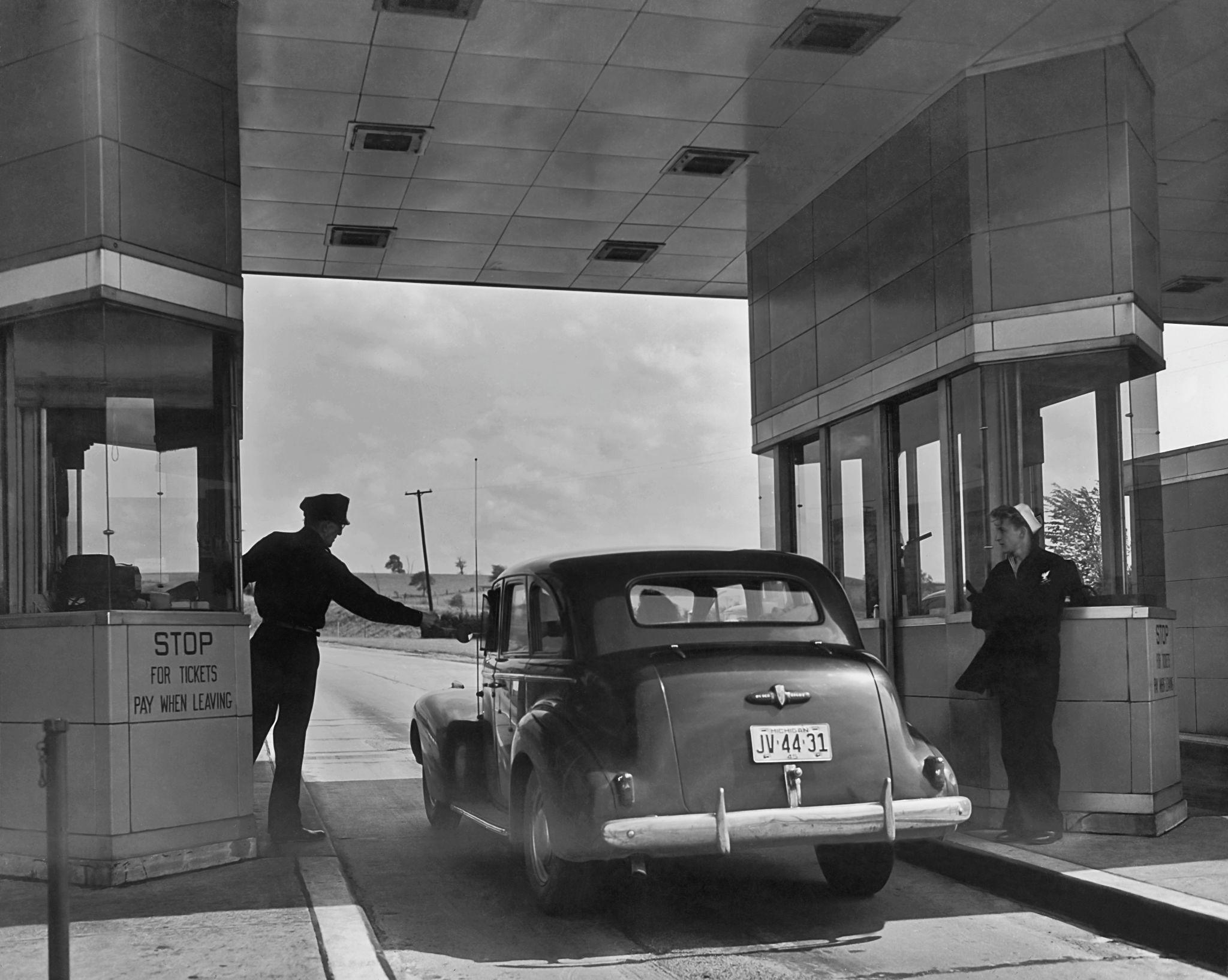
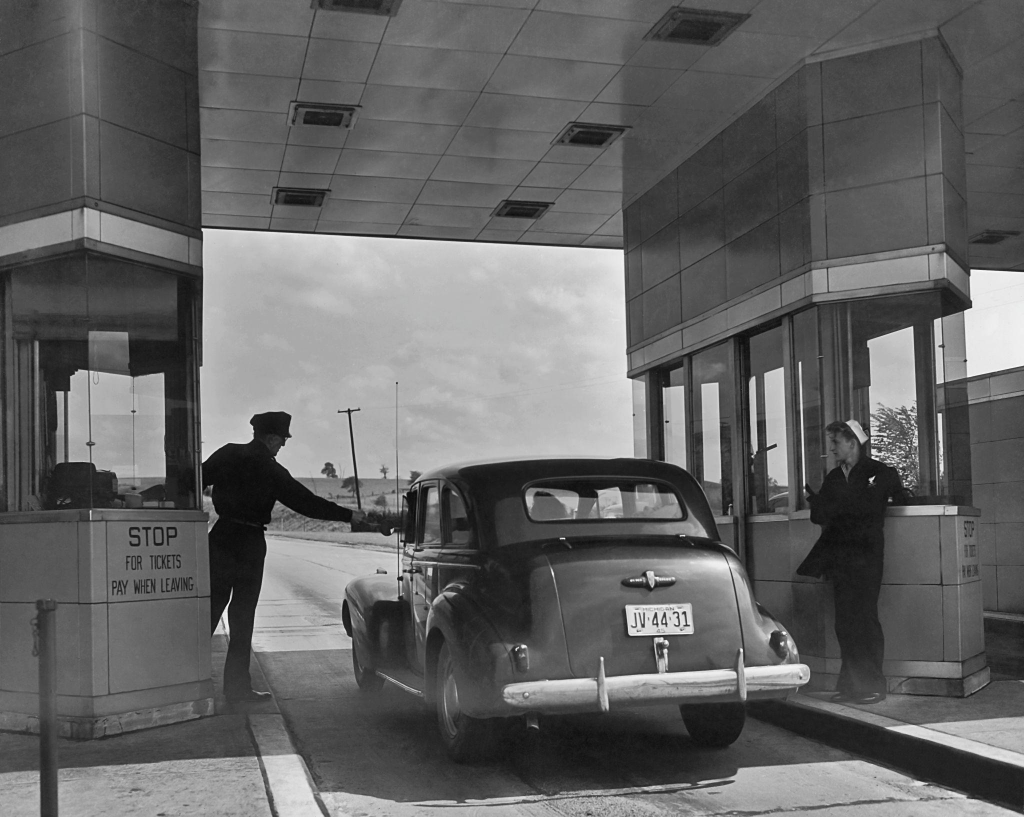
Yesterday when I entered the Pennsylvania Turnpike, I noticed something that made me pause for a moment. The roadwork was finally finished where the toll booths used to stand. The pavement was smooth and wide now, the old concrete islands gone, the booths completely removed as if they had never been there.
It’s just open highway now.
The toll readers aren’t even there anymore. They’re located farther down along the Turnpike route, quietly doing their job while traffic moves at full speed.
It wasn’t a surprise. We’ve all watched it coming for years. First the electronic tolling signs went up, then the booths started closing one by one, and eventually the workers disappeared. What I saw yesterday was simply the final step — the physical evidence being erased.
Still, seeing that empty stretch of highway made me think.
My grandchildren will probably never know what a toll taker was.
They won’t remember slowing down and pulling up to a little window. They won’t remember handing someone a ticket or digging through the console for change while a line of cars stacked up behind them. To them, the idea that thousands of people once sat in those booths collecting tolls will sound like something from another era.
As I drove through, I caught myself smiling a little, because the truth is I’ve seen this story play out before.
The quiet disappearance of jobs as technology moves forward isn’t new. It has happened again and again throughout history. In fact, I watched it unfold inside my own family.
My father was a draftsman. In his day that was a respected and highly skilled profession. He worked at a large drafting table with pencils, rulers, triangles, compasses, and stacks of paper spread out in front of him. Every line had to be exact because those drawings became the instructions used to build real machines.
For a time he worked for Boeing on the famous Chinook helicopter project. The Chinook is one of those aircraft people recognize immediately — two massive rotors, one in the front and one in the back, capable of lifting enormous loads. It first flew in the early 1960s and is still flying today, which says something about how well it was designed.
What most people don’t realize is how those machines were designed back then.
Not only were the plans drawn entirely by hand, but every single part that went into building that helicopter had to be cataloged and assigned a part number. Every bracket, every panel, every fastener had to be documented.
Imagine the instruction sheet that comes with a plastic model kit showing how every piece fits together. Now imagine that instruction manual for a helicopter the size of a house.
Those diagrams showed every detail — measurements, tolerances, materials, and part numbers — and every one of them had to be drawn and recorded by hand. Entire rooms were filled with drafting tables where skilled men slowly turned engineering ideas into something that could actually be built.
Then computers arrived.
Slowly those drafting tables began disappearing. Computer-aided design replaced the pencils, templates, and blueprint machines that had once filled entire departments. The profession didn’t vanish overnight, but the nature of the work changed so dramatically that the drafting rooms my father worked in eventually became a thing of the past.
Technology moved forward again inside my own family.
My sister became a programmer — what people today would call a coder. She was part of a team that helped develop one of the early ATM networks for PNB Bank. At the time it was revolutionary. The idea that you could walk up to a machine and withdraw money from your bank account anytime you wanted was something people had never experienced before.
Before ATM machines, if you needed cash you had to go inside the bank, stand in line, and deal with a teller during banking hours. Once those machines arrived, the entire system changed. Banking hours mattered less, and something that once required a person sitting behind a counter could now be done by a machine.
When you step back and look at it, these kinds of changes follow a pattern that has existed for centuries.
During the Industrial Revolution many of the most respected trades in society were built on hand skills that took years to learn. Shoemakers crafted entire pairs of shoes by hand. Weavers spent years mastering their looms. Blacksmiths forged tools, hinges, and hardware for entire communities.
Then machines arrived.
Power looms replaced hand weavers. Factories replaced independent craftsmen. Railroads replaced stagecoaches. Electric lighting replaced lamplighters who once walked city streets every evening lighting gas lamps by hand.
Each invention improved efficiency and changed the way people lived. But at the same time, each one quietly replaced professions that people once believed would always exist.
When I think about that pattern, it brings me back to my own career.
When I first started in the antique business, learning the trade was nothing like it is today. There were no shortcuts and certainly no instant answers. If you wanted to understand the business you had to learn it the slow way.
For me that meant years of trial and error.
I spent countless mornings and weekends going to live auctions. Not online auctions — real ones where you sat in a chair and watched the room. You learned by observing who bid, what they bid on, and what things actually sold for.
I spent time with seasoned veterans who had been in the business for forty or fifty years. They could pick up a piece of glass or pottery and tell you things you would never find in a book because their knowledge had been built piece by piece over decades.
And of course there were the books.
Price guides stacked on shelves. Reference books filled with photographs. If you wanted to identify something you flipped through page after page comparing shapes, patterns, and maker’s marks.
Research took time.
Real time.
Today someone can take a simple picture of an object with a phone and within seconds technology can identify it, show comparable sales, and estimate a value. What once required years of accumulated experience can now happen almost instantly.
Artificial intelligence will likely accelerate this process even further.
And as I drove through that empty stretch of the Pennsylvania Turnpike yesterday, I realized something.
The toll takers are simply the latest chapter in a story that has been unfolding for more than two hundred years.
The only difference now…
is how fast the next chapter may arrive with AI arriving.
Discover more from Beebop's
Subscribe to get the latest posts sent to your email.

 Beebop's