


“More details and behind-the-scenes content at beebops.blog” Click Beebop above
My father always taught me to stick up for the underdog. “Never let anyone make fun of the weak,” he would say. “And if you see it happening, you stop it.” That lesson stuck with me. Maybe it was because I saw firsthand how cruel kids could be, or maybe it was because I knew deep down that being cast aside leaves a scar that doesn’t fade easily.
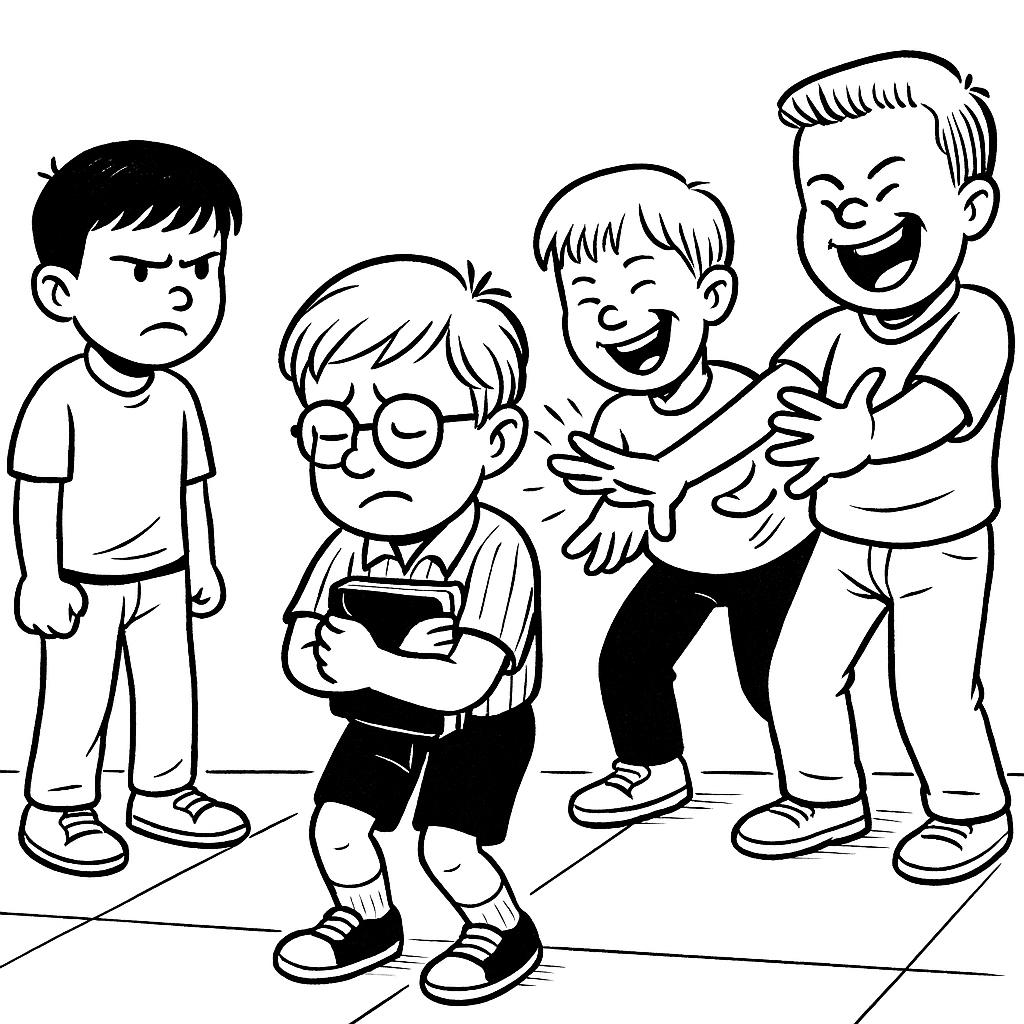
In grammar school, there were two boys who always seemed to take the brunt of it. One was Dean, who had been born with a deformed ear that drew the wrong kind of attention. The other was Joseph, a painfully shy boy who had accidents in class and carried the weight of constant shame. The other kids didn’t let it slide—they turned his weakness into a sport.
I could never just watch. Maybe it was my dad’s voice in my head, or maybe it was something already wired into me, but I stepped in. I told the bullies to back off, I stood with Dean and Joseph, and I made sure they knew someone was in their corner. At the time, I thought I was only standing up for them. What I didn’t realize was that one day, I’d know exactly how they felt.
Fast forward a couple decades. Against the odds, without a college degree or the kind of background most executives flaunted, I had worked my way up to a Vice President’s chair. I earned it the old-fashioned way—through long hours, clear results, and a track record that spoke louder than any diploma could. Every promotion came because I delivered, not because of pedigree.
And yet, even at that level, there were moments that reminded me I was different.
One of those moments came at a corporate golf outing where I was paired with the CEO, the President, and the Chairman. These were men who had lived their entire adult lives inside boardrooms and country clubs, puffing cigars, throwing back drinks, and talking about their next big deal. They had the polish, the pedigrees, and the golden parachutes waiting for them.
I had results. I had grit. But I didn’t have their world.
They were cordial, even friendly, but I could feel the gap. Their laughter was polite, their questions carried a hint of curiosity—like I was a novelty, the guy who had reached VP without the traditional credentials. I realized then what Dean and Joseph must have felt: not openly excluded, but never fully accepted either.
Standing on that green, I thought back to those boys in school. I understood now the subtle sting they must have felt—the way people could smile at you without really seeing you. For the first time in years, I felt like the outsider again.
But here’s the truth: it didn’t break me. That round of golf made something crystal clear. This wasn’t my world, and I didn’t need to belong to it. I had proven myself where it mattered. My promotions, my results, and my leadership spoke for themselves. And years later, when I looked back, I realized I had been right—the rat race, the excess, the stress, it swallowed too many of those men whole.
The story came full circle one afternoon in Macy’s when I heard someone call my name. I turned, and there was Joseph—the same boy I had defended years before. But this time he wasn’t timid. He was confident, working as a department manager, and he thanked me.
“You were the only one,” he said. “The only one who ever stood up for me. You made school bearable.”
I was floored. Something I had almost forgotten had lived in him all those years. And in that moment, I realized the real measure of belonging isn’t whether the powerful people accept you. It’s whether you’ve lived true to the values that shaped you—and whether you’ve made someone else’s burden lighter along the way.
That day in Macy’s, I finally felt at peace. Not on a golf course with executives, but in the knowledge that I had carried my father’s lesson with me and passed it on. And that, to me, is worth more than any title on a business card ever could be.
Discover more from Beebop's
Subscribe to get the latest posts sent to your email.

 Beebop's