
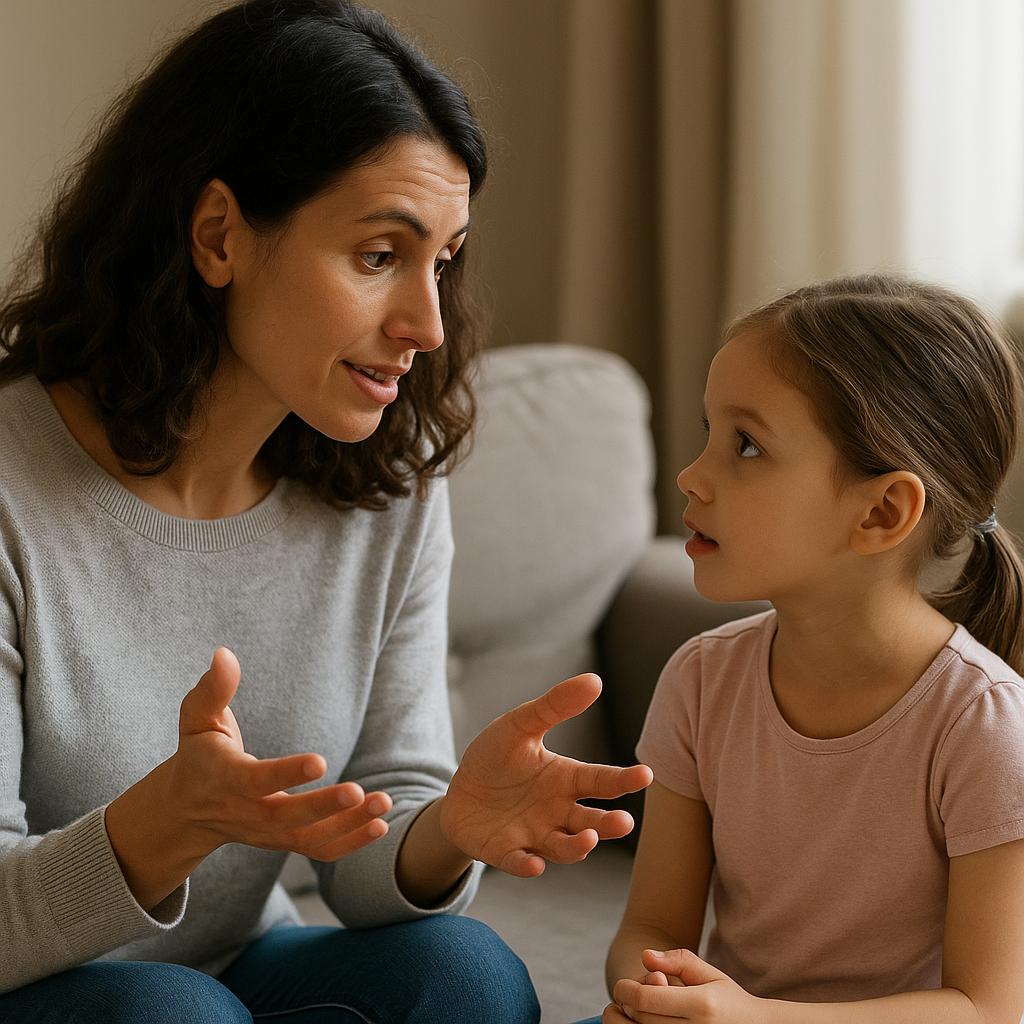
“The first five years of a childs life have so much to do with how the next eighty turn out.”
As a parent and grandparent, I’ve learned something I wish I had truly grasped decades ago: young children understand far more than we realize. Parents often look at their toddlers or preschoolers and think, “They’re too young to understand.” But that assumption couldn’t be further from the truth.
From the moment they arrive — and even before they’re born — children’s brains are like powerful vacuum cleaners, quietly and constantly sucking in every sound, expression, and emotional tone around them. They don’t miss much. Their hearing is sharp, their observation skills uncanny, and their comprehension grows by the hour.
I often joke that kids have “super hearing,” but science backs it up. Researchers at the University of Washington found that infants just five months old already show brain activity in attention and language regions when their caregivers interact with them. Those same infants later demonstrate stronger language skills at 18 to 30 months. In other words, even when they can’t talk, they’re listening — deeply.
And it goes further than just hearing. They’re processing tone, mood, rhythm, and even meaning. Every laugh, every sigh, every argument within earshot is quietly wiring their young brains. When we underestimate that, we miss one of life’s most powerful truths: children are learning from everything we say and do.
The Science Behind It
A baby’s brain at birth is about one-quarter the size of an adult’s. By the end of the first year, it doubles, and by age three, it reaches nearly 80 % of its adult size. During those early years, the brain forms billions of neural connections, shaped directly by the experiences, language, and emotional cues surrounding them.
That’s why talking “baby talk” all day long, without giving real words or meaning, can limit more than it helps. Studies from MIT and other universities show that back-and-forth conversation — where a parent speaks, pauses, and listens for the child’s sounds, gestures, or responses — triggers far greater brain growth than simply talking at a child.
I’m not saying parents shouldn’t have fun or be affectionate with their babies. “Goo-goo” moments are fine. But too often, parents forget to also include real language — the kind that paints pictures and connects emotion to experience. When you narrate what you’re doing, explain why you’re feeling something, or describe what’s happening around you, you’re building their internal world. You’re giving structure and meaning to their thoughts long before they can express them.
Giftedness: More Than Just IQ
When people call a child “gifted,” they often assume it’s just raw intelligence — a big IQ number. But giftedness isn’t only about genes or brainpower. It’s about exposure, opportunity, and what the environment provides during those formative years.
Research on gifted development has revealed that what we call “talent” is often the result of early and consistent engagement. A child who grows up hearing rich music, or being read to every night, or having parents who encourage questions and curiosity, develops neural wiring that makes them excel later in life. It’s not just nature; it’s nurture meeting opportunity.
The Differentiating Model of Giftedness and Talent (DMGT) explains this beautifully: gifts are natural abilities, but talents are those abilities developed through effort, practice, and environment. Early exposure acts as the spark that ignites those natural gifts into true brilliance.
Think about some of the youngest college graduates in history. Many of them didn’t come from wealthy families or have fancy tutors. What they had was early access — exposure to language, learning, music, or science at an age when their brains were most absorbent. Mozart began composing at five because he was surrounded by music from birth. Tiger Woods was swinging a golf club before most kids were walking confidently.
Studies show that gifted children often benefit more from enriched environments than their peers. Their brains respond strongly to complexity, challenge, and stimulation. When they’re surrounded by music, math, or art early, they build neural pathways that amplify learning later. It’s not just about natural ability — it’s about timing and opportunity.
The Role of Parents
If parents truly understood how much their child is absorbing, they’d realize they are the most powerful teachers in that child’s life — long before preschool begins.
Every word spoken, every conversation shared, every bedtime story read, every problem solved together becomes a part of that child’s intellectual and emotional DNA. Parents who talk to their babies like little thinkers — who explain things, use rich language, express emotion — are literally shaping the architecture of their children’s brains.
Here’s what I’ve found helps most:
- Narrate daily life. “We’re going to the store to buy apples. They’re red and crisp and good for you.” You’re teaching sequencing, vocabulary, and connection all at once.
- Engage in back-and-forth. Even when your child just babbles or points, treat it as a conversation. Pause, respond, and encourage — that interaction lights up the brain.
- Expose early and widely. Play music, explore outdoors, show them how things work, read books with big ideas. Early exposure multiplies potential.
- Model emotion and reasoning. When you explain your feelings, they learn empathy and emotional intelligence. When you reason out loud, they learn logic.
- Challenge gently. Offer complexity in small doses. Kids are capable of understanding cause and effect, emotion, and fairness earlier than we think.
Why It Matters
Giftedness, comprehension, emotional awareness — they all start earlier than most parents assume. The environment we create in those first years doesn’t just influence how fast a child learns words; it shapes how they think, empathize, and connect with the world for life.
The truth is, children are natural learners. They’re wired to absorb everything. The real question is, what are we feeding those young minds? Words of kindness or chaos? Real conversation or endless baby talk? Experiences that expand their world or limit it?
Our voices, our habits, and our homes set the tone for who they’ll become.
So next time you’re holding your baby, remember — they’re not just looking at you; they’re studying you. They’re learning language, emotion, and truth all at once. They don’t just hear. They understand.
Closing Thought
In a world filled with screens and noise, the most powerful thing we can give our children is still our attention and our words. When we talk to them as thinkers, dreamers, and capable human beings — even before they can answer back — we’re building their future one sentence at a time.
Discover more from Beebop's
Subscribe to get the latest posts sent to your email.

 Beebop's