
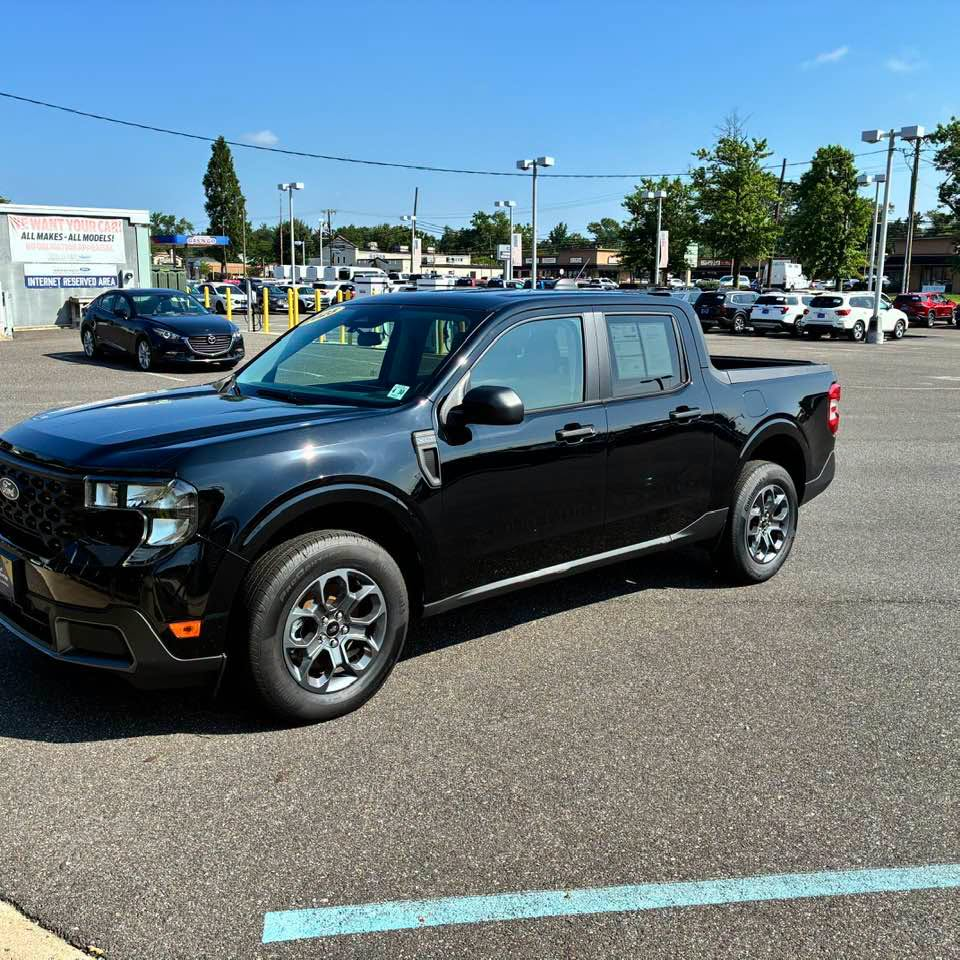
I’ve only owned my Ford Maverick Hybrid for about a week, but I’m already learning that driving a hybrid efficiently is a little different from driving a conventional car.
So far, I’ve driven over 400 miles and averaged 42.2 MPG, including quite a bit of highway driving. What makes that even more interesting is that when I bought the truck, it had about 3,900 miles on it and the previous owner had averaged only 34.5 MPG. Same truck, very different results.
I’ve always been a conservative driver. I’m retired, I’m usually not in a hurry, and I don’t see any reason to race from one red light to the next. I accelerate gradually—almost like there’s an egg between my foot and the gas pedal. I also live in a very hilly part of Pennsylvania, so I try to take advantage of gravity. If I’m going downhill and there’s no traffic behind me, I’ll let the vehicle coast rather than automatically giving it gas just to maintain an exact speed.
The Maverick has an EV Coach that shows what the hybrid system is doing. Sometimes the gasoline engine is running in Hybrid mode, sometimes the engine shuts completely off and the electric motor moves the truck, and sometimes the system is generating electricity and putting energy back into the battery.
At first, one part of this fooled me.
I thought regenerative braking was always better than coasting. When you slow down, the green charging bar gets much larger, so naturally it looks like you’re doing something good. You’re putting energy back into the battery.
But I learned something important: if you don’t need to slow down, coasting is actually better.
When you coast, you’re keeping the energy you already have in the form of momentum. When you use regenerative braking, you’re taking some of that momentum, converting it into electricity, storing it in the battery, and later converting it back into motion. Regenerative braking is far better than wasting that energy as heat through conventional brakes, but there are still losses every time energy is converted.
So I’ve developed a very simple rule:
Coast when I can. Regenerate when I need to slow down. Brake when I have to.
I’ve also learned that there’s no point trying to force the truck to stay in electric mode. Sometimes I can be driving under what seem like exactly the same conditions and the truck will use the gasoline engine one time and electric power the next. The computer is considering things I can’t see—battery charge, engine temperature, electrical demand, road grade and how much power I’m requesting.
So I’ve stopped worrying about it.
I manage the momentum and let the truck manage the energy.
On some of the hilly back roads around southeastern Pennsylvania, I’ve seen trip averages around 44 MPG. For a four-door pickup truck that I never have to plug in, I find that remarkable.
But there’s another reason I’m so impressed with this truck that has nothing to do with fuel economy. The seating position is extremely comfortable for me. I sit higher, with my knees below my hips, and on longer drives I don’t experience the same discomfort I had sitting low in my previous Volkswagen Golf SportWagen.
At this point in my life, that may be worth even more to me than the gas mileage.
The Maverick gives me a comfortable four-door vehicle, a pickup bed when I need one, the ability to tow my small trailer or boat, and fuel economy that would have sounded ridiculous for a pickup truck not that many years ago.
This may very well be the last vehicle I ever buy. If it is, after my first week with it, I think I made a pretty good choice.
Discover more from Beebop's
Subscribe to get the latest posts sent to your email.


