
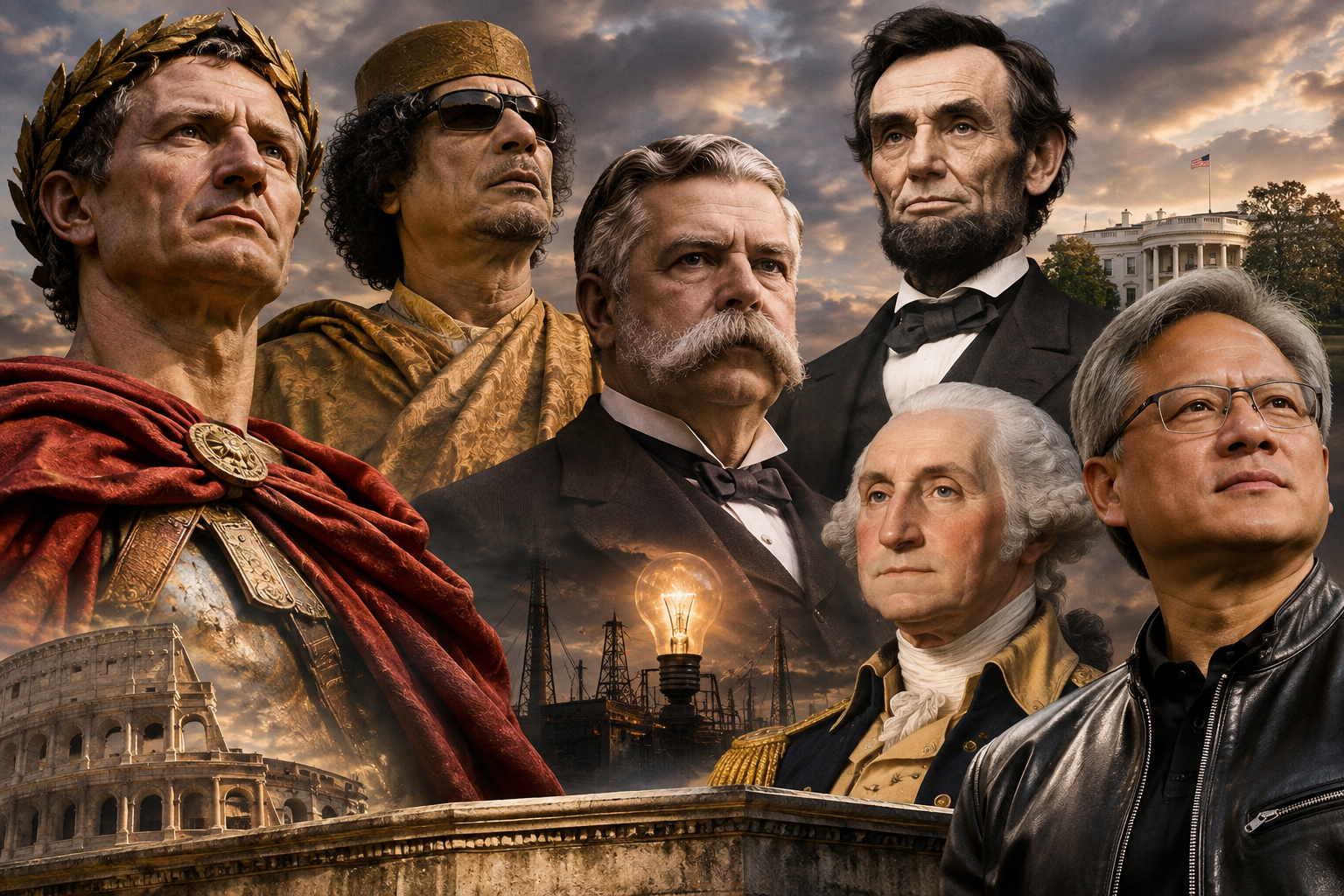
I’ve always been fascinated by great leaders throughout history, going all the way back to the Roman Caesars. What’s interesting about studying these individuals is that many of them accomplished some extraordinary things for civilization, yet some of these same individuals were capable of doing some pretty terrible things.
It makes me wonder whether some of the very characteristics that enable people to become powerful leaders are also responsible for their dark side.
Take Muammar Gaddafi, for example. While there is no denying the abuses that took place under his leadership, Libya also enjoyed free education, free public healthcare, inexpensive gasoline and a relatively high standard of living compared to much of Africa. History is a little more complicated than simply labeling someone good or bad.
I think one of the most important characteristics of a strong leader is that they don’t spend a whole lot of time worrying about what other people think of them. They have enough confidence in themselves and their judgment to make decisions that may not be very popular.
If you’re constantly looking for everybody’s approval, how in the world are you going to lead anybody?
Look at Jensen Huang, the CEO of Nvidia. Here’s a guy who committed enormous amounts of money and resources to technology that many people didn’t see much value in at the time. He had a vision, believed in himself and stuck with it. He’s also known to be an extremely demanding individual who expects a great deal from the people around him.
I saw some of these same characteristics during my years in corporate America. Many of the people who made it to the top had a very tough side to them. Some were extremely talented individuals whose personal behavior and moral character left a lot to be desired. Yet they were very effective at what they did. I sometimes wondered whether their ability to put aside certain moral considerations actually contributed to their success.
I think one of the biggest problems we have in politics today is our inability to separate how we feel about someone personally from what that individual actually accomplishes.
If we like someone, we tend to overlook their failures. If we dislike someone, we have a hard time giving them credit for anything they’ve done right.
Just because somebody is a nice guy doesn’t mean he’s capable of running a country. And just because somebody rubs you the wrong way doesn’t mean he’s incapable of doing a good job.
That’s one of the challenges of a democracy. The personality traits that enable someone to win an election aren’t necessarily the same personality traits needed to govern a nation. Our founding fathers recognized some of the dangers of popular passions when they established our constitutional republic and the Electoral College, giving individual states a role in electing our president.
On the other hand, one of my favorite historical figures is George Westinghouse. Here’s a man who possessed many of those strong leadership characteristics, yet so much of what he accomplished was for the betterment of humanity. From making railroad travel safer to bringing electricity into people’s homes, his accomplishments changed the way we live. He also developed a reputation for treating his employees fairly.
Westinghouse is a great example of how someone can be extremely ambitious, competitive and strong-willed without being ruthless.
When you look at leadership from a Christian perspective, it becomes even more interesting. Many of the things Christianity teaches us to guard against, such as jealousy, envy, greed, excessive pride, arrogance and cruelty, are sometimes the very things that drive people to become successful and powerful.
But what if we could take some of those human tendencies and channel them into something positive? Turn jealousy into motivation, ego into confidence, greed into ambition and ruthlessness into the strength to make difficult but necessary decisions.
During my years in management, I always tried to live by one simple principle: treat people the way I would want to be treated. That didn’t mean I was a pushover or that I shied away from making tough decisions. Believe me, I’ve had to make plenty of them. But I tried never to allow my ego, jealousy, arrogance or personal feelings toward someone to dictate the decisions I made. Just because I was in a position of authority didn’t make me any better than the people who worked for me. I always believed you could be a strong and effective leader without compromising your moral values or taking away someone else’s dignity .
Imagine what someone could accomplish if they possessed all the strengths necessary to become a powerful leader, combined with the humility, compassion and moral values that Christianity teaches us.
I believe a great leader has to be willing to listen to other people, but that doesn’t mean he has to agree with them. At some point, somebody has to make the decision, and somebody has to take responsibility for it.
Whether you’re leading a nation, an army or a business, what separates a powerful leader from a truly great leader, in my opinion, is what they choose to do with that power.
Perhaps the most interesting thing about great leadership is that you have to care a great deal about people without worrying a whole lot about what those people think of you.
And from a Christian perspective, what good is acquiring all the wealth and power in the world if you lose your soul in the process?
Discover more from Beebop's
Subscribe to get the latest posts sent to your email.


