


How Much Would You Pay to Go to the Moon?
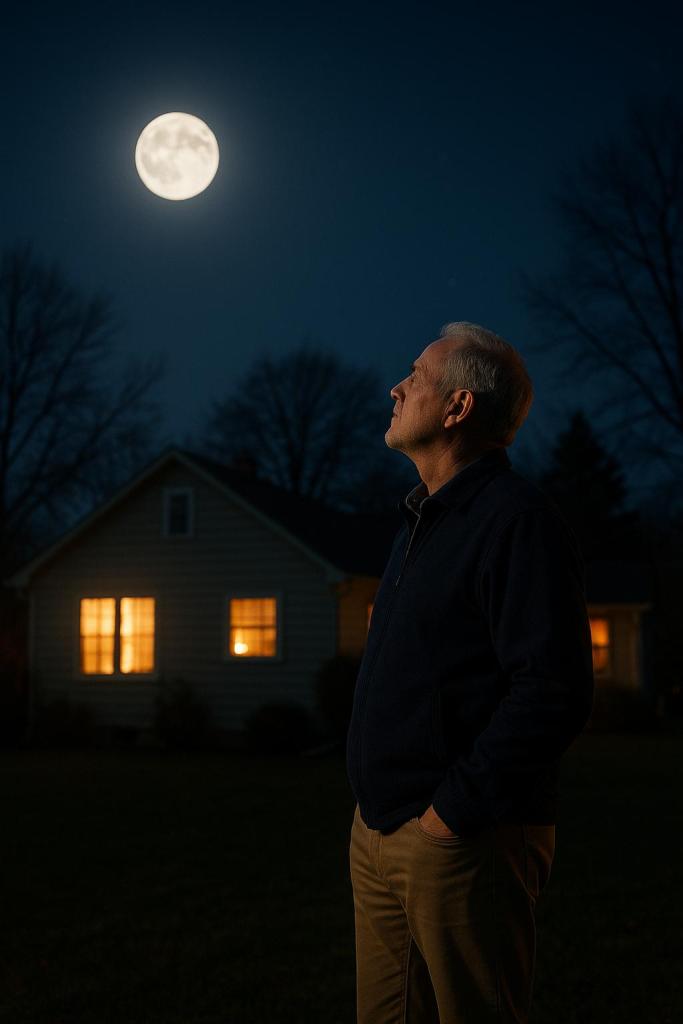
Let’s say someone came up to me tomorrow and said, “For a few hundred dollars, you can take a trip to the moon.” The question is—would you go?
My answer would be simple: not a chance.
It’s not because I lack curiosity or adventure or afraid . I’ve always been fascinated by the stars, the vastness of space, and the miracle of human ingenuity that made moon travel possible.
Some people are wired differently. Psychologists call it the Sensation-Seeking Personality—people who constantly crave new, intense experiences. For them, the ordinary quickly becomes dull, and they’re always reaching for something bigger: faster cars, riskier deals, deeper dives, higher peaks. Some even need danger to feel alive. When money is no object, that pursuit can reach cosmic proportions—literally.
That’s why you see billionaires booking tickets to space, climbing mountains that have already been conquered, or building super-yachts the size of hotels. They’re not just chasing adventure; they’re chasing feeling. What they once found thrilling no longer satisfies, so they keep going higher, faster, farther. Psychologists call this hedonic adaptation—the more you have, the more it takes to feel the same level of excitement.
But here’s the interesting part: when people are young, some of this behavior is actually normal.
Science tells us that the teenage and young adult brain is still developing—especially the prefrontal cortex, which controls judgment, impulse regulation, and long-term thinking. At the same time, the dopamine system—the part of the brain that rewards novelty, excitement, and risk—is in overdrive. This combination creates what neuroscientists call a “developmental imbalance”: the gas pedal (dopamine) is fully engaged, but the brakes (the prefrontal cortex) aren’t fully installed yet.
That’s why young people are drawn to risk-taking, exploration, and big experiences. They’re literally wired to test boundaries and seek novelty. It’s how humans learn, grow, and eventually discover what truly fulfills them.
But it’s not just brain chemistry—it’s also how young people perceive time and mortality. When you’re young, life feels endless. Decades stretch out in front of you like a vast highway with no end in sight. You feel invincible, convinced that danger and tragedy are things that happen to “other people.” That illusion of immortality gives young people the courage—or recklessness—to take chances that older adults wouldn’t dream of. As we age, experience teaches us that life is fragile and finite. We become more protective of our time, our health, and our peace. The clock that once seemed invisible starts ticking louder, and we value depth over dazzle.
In short, the young are designed to chase the horizon; the old are designed to appreciate the view.
I’ve never been wired for extremes, even when I was younger, but I understand the drive. My life has always been about finding meaning close to home. I find my thrill in smaller, quieter places—restoring an old house, uncovering a hidden gem at an estate sale, or fishing with my grandkids on a calm summer evening. Those moments might not make headlines, but they fill me with something far more lasting than a ten-minute space ride: contentment.
I’ve always believed that joy isn’t found in the extraordinary—it’s found in the familiar. Watching the sun dip below the horizon, listening to the laughter of my family, or just taking a quiet walk through town—all of it reminds me how rich life already is. You don’t need a rocket ship to find meaning; you just need to open your eyes to what’s right in front of you.
Would it be amazing to see the moon up close? Sure. But I’d rather stand in my own backyard, look up, and appreciate it from here—knowing that contentment isn’t found millions of miles away. It’s found in gratitude, in family, and in the stillness of ordinary days.
And truth be told, I’ve always been a cheap bastard. My thrill comes from making money, not spending it—especially not on things that don’t make me more of it. I’ll take a profitable deal or a big antique score over a joyride to the Sea of Tranquility any day.
So, how much would I pay to go to the moon?
Nothing. I already have everything I need right here.
Discover more from Beebop's
Subscribe to get the latest posts sent to your email.

 Beebop's