
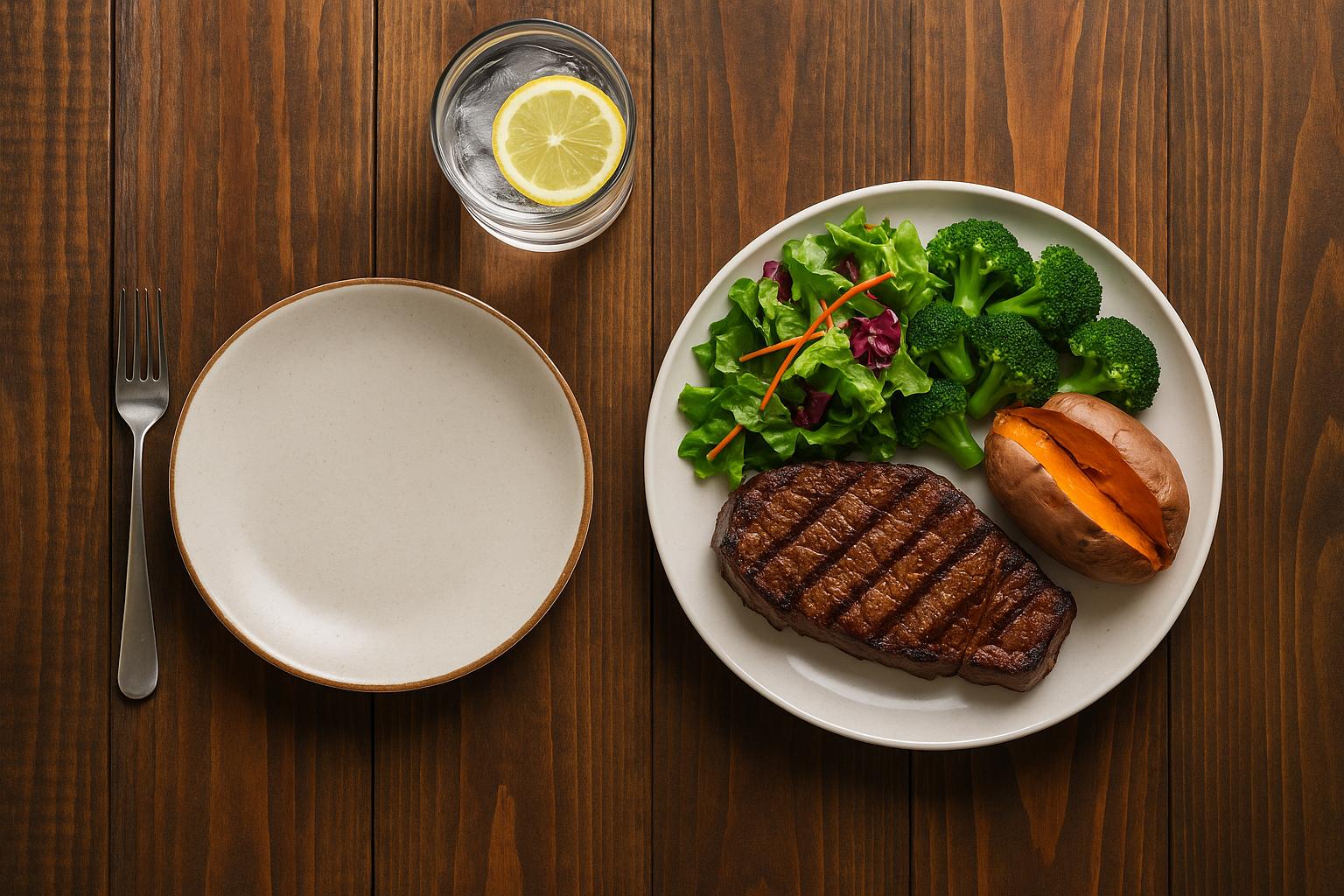


If you’d told me five years ago that changing when I eat would also change how I live — including how much time I spend staring at screens — I’d have laughed. But here I am, five years later, leaner, sharper, and spending less time online than ever.
You see, when your body runs clean and steady, your mind follows. My phone used to be a constant companion — something to fill the time between meals or to distract me when I felt sluggish. But once I started fasting, everything shifted. I didn’t just lose weight — I gained clarity, discipline, and focus. And those three things are the ultimate screen-time management tools.
Why Feasting Keeps Me Lean
I’ve struggled with my weight my whole adult life. Growing up in an Italian family, food wasn’t just nourishment — it was love, tradition, and a reason to gather. Let’s just say I wasn’t fat as a kid, but my mom did shop in the Husky department for me. There was always pasta on the stove, fresh bread on the counter, and second helpings were a sign of respect, not gluttony.
When Dr. Atkins came along in the mid-1970s, that was the first time I heard about cutting carbs. I jumped on it like everyone else and, to my surprise, the weight came off fast. But I never really understood why it worked — or why I couldn’t stick with it for life. I’d lose the weight, then fall right back into old habits. My adult years turned into a lifelong rollercoaster, swinging between 260 pounds and 195, over and over again.
It wasn’t until later in life that I finally figured it out. The key wasn’t just what I ate, but when I ate.
The Turning Point
In 2019, I started experimenting with a keto lifestyle — real keto, not the “bacon and butter all day” version you see online. Within a few months, I learned something important: once my body switched over to burning fat for fuel, I stopped feeling enslaved by hunger. For the first time, I could skip meals without feeling miserable. That’s what opened the door to time-restricted eating — fasting 20 hours a day and eating during a 4-hour window.
It sounds extreme, but it became second nature. I eat between 3 p.m. and 7 p.m., and I genuinely look forward to that window. It’s like my body knows what’s coming, runs efficiently all day, then rewards me with the perfect meal in the evening.
The result? My bloodwork has never been better. My A1C is low, my energy levels are high, and my mind is sharper than ever. I don’t snack at all, and I eat clean — mostly whole, natural foods.
That mental clarity sparked something new in me: writing. Since changing how I eat, I’ve completed my first 480-page family book and launched a blog that’s now one of the fastest-trending sites on WordPress. The focus, discipline, and creativity I have today are light years beyond where I was ten years ago.
“You Can’t Do What I Do”
Whenever I tell people about my success with fasting, they always say, “Wow, I could never do that.” I usually smile and say, “You can’t.” That always gets their attention — and sometimes a little anger. Then they fire back, “If you can, I can!”
That’s when I explain the truth: if you go straight from a traditional American eating pattern — breakfast, lunch, dinner, and snacks in between — to a 20/4 fasting routine, your body and mind simply won’t let you. You’ll crash.
You have to train your body to be fat-adaptive first. The way to do that is by starting on a keto diet for at least a year. Keto teaches your body to use fat for energy instead of sugar, and it quiets your hunger signals. You’ll lose weight, but it won’t be fully sustainable yet — because once you reintroduce carbs too soon, your old cravings will come roaring back and knock you off track.
That’s why, for me, keto was the foundation — fasting was the evolution. Once you’ve retrained your metabolism, the 20/4 schedule doesn’t feel like deprivation. It feels natural.
Feast Like an Ancestor
Somewhere along the way, I realized I was living like our ancient ancestors — eating in cycles, not on a schedule. They didn’t have constant access to food. They feasted when they could, fasted when they had to, and thrived because of that rhythm. In summer, they’d eat fruit and roots; in winter, they went long stretches on meat and fat.
That idea led me to carb cycling — intentionally adding carbs back into my diet on certain days. What I discovered shocked me: after a big carb day — a bowl of pasta, a cheesesteak, or ice cream with the grandkids — I often lost a few pounds a few days later.
Why That Happens
It turns out, when you’re metabolically healthy, your body doesn’t freak out over carbs. A short burst of higher carbs resets key hormones like leptin and thyroid (T3), reminding your metabolism that it’s safe to keep burning hot. In other words, my body doesn’t see a pizza night as an attack — it sees it as a signal that everything’s fine.
Because my insulin sensitivity is strong from fasting, any carbs I eat get used for energy or stored temporarily as glycogen — not as fat. Then, when I go back to fasting, my body effortlessly flips the switch back to fat-burning mode.
The Freedom of Balance
What’s different now is that I’m not afraid of food anymore. I can hit Dairy Queen with my grandkids, enjoy a bowl of my favorite pasta, or grab a slice of pizza now and then without guilt — and without seeing the scale creep up.
And every once in a while, especially after a big holiday like Thanksgiving, Christmas, or my birthday, I’ll do a full multi-day fast. It’s not punishment — it’s a clean-out. It resets everything I may have overindulged in, clears my mind, and reminds me that discipline and freedom actually live side by side.
The difference is that I finally understand how my body works. It’s not about restriction or punishment; it’s about rhythm and balance. I feast, I fast, and I feel better than I did in my forties.
Fasting and Screen Time — The Surprising Link
The mental clarity I’ve gained from fasting has done more than keep me fit — it’s helped me stay off screens. I don’t get bored or restless anymore, and I don’t need to scroll my phone for stimulation. When I sit down at my computer, it’s to write, create, or learn — not to escape.
When your body is balanced, your brain doesn’t chase cheap dopamine hits.
Fasting gives me the same clarity food used to take away.
So when people ask, “How do you manage screen time?” my answer is simple:
I manage my body first. The rest takes care of itself.
Please like comment and subscribe. Thanks
and check out my store on eBay https://www.ebay.com/str/consignfordesignhometreasures
Discover more from Beebop's
Subscribe to get the latest posts sent to your email.

 Beebop's