
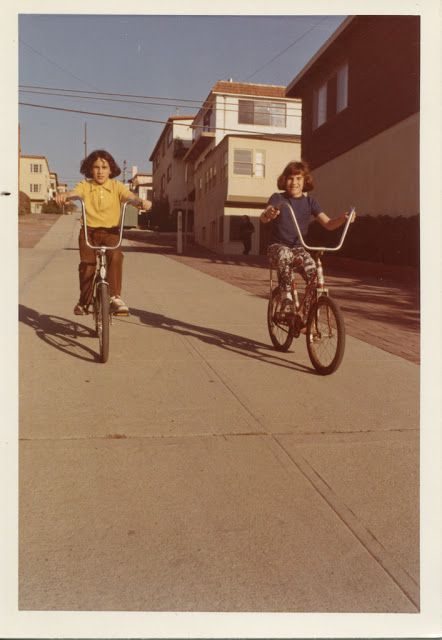


“Change without wisdom isn’t progress.”
“Change without wisdom isn’t progress.”
What I complain about the most is how much this country has changed from the one I grew up in.
I’m in my 69th year now, and the America of my childhood feels like it existed under a different set of assumptions. Not perfect—never perfect—but steadier. More grounded. There was an understanding of how things worked, and more importantly, why they worked.
When I was growing up, parents raised us with discipline and accountability. Not because it was trendy or written in a book, but because that was the responsibility you took on when you became a parent. Actions had consequences, and those consequences were consistent.
If you got in trouble in school, your parents didn’t march into the building to defend you. They didn’t question the teacher’s motives or look for someone else to blame. You got into worse trouble at home. School and home weren’t opposing forces—they reinforced each other. Adults trusted other adults to do the right thing.
A bad report card came home with no excuses attached. You didn’t blame the teacher. You didn’t blame the system. You didn’t explain it away. You owned it. Carelessness had consequences too. If you broke something because you weren’t paying attention, that was on you.
Dinner was dinner. If you didn’t like what was on the plate, you didn’t eat. There were no special meals, no alternate menus, no negotiations. Hunger was a quick teacher, and it worked. No drama. No trauma. Just reality.
There were no threats of punishment because punishment didn’t need to be threatened. It simply followed. Calmly. Predictably. Accountability wasn’t emotional—it was structural. You always knew where the line was.
Public safety wasn’t something enforced only by police or laws on paper. It was communal. Neighbors watched out for each other. Adults corrected kids who weren’t theirs, and nobody thought that was outrageous. If you acted up on the block, your parents would hear about it before you got home. That wasn’t abuse—it was reinforcement.
And there was no internet or social media shaping young minds before they had any foundation. No algorithms feeding confusion, outrage, or comparison. You learned values from God, parents, neighbors, teachers, books, and real life. Boredom existed, and it was healthy. Silence existed, and it didn’t scare anyone.
But as much as we talk about kids today, what really bothers me is how adults behave now.
We are more divided than I ever remember. Politics doesn’t just reflect opinions anymore—it defines identity. It decides who you talk to, who you trust, who you avoid, and sometimes who you no longer speak to in your own family. That would have been unthinkable when I was younger.
No one at work knew your politics—and nobody cared. You were judged on whether you showed up, did your job, and treated people fairly. Political beliefs were private. They weren’t worn like uniforms. You didn’t test someone before engaging with them. There was no litmus test before conversation.
Laws were laws. And nobody—nobody—defended the lawbreakers. There was room for mercy, but not for excuses. Wrong was wrong. Accountability wasn’t political. It didn’t depend on which side you were on.
Most people you met were generally decent. Caring. Honest. Rooted in something simple and timeless—the Golden Rule. Treat others the way you want to be treated. It wasn’t a slogan or a hashtag. It was how people lived. You assumed good intent first because most people deserved that assumption. If someone slowed down driving in front of you, you worried if they were ok—you didn’t blare your horn, flash your lights, and tailgate them.
You never—and I mean never—displayed outrage publicly for all to see based on a tweet, a YouTube reel, a Facebook post, or a TikTok video that may have been totally AI-created or a twisted version of a news story.
Today we lead with suspicion. We assign motives before listening. We label before understanding. Disagreement isn’t just disagreement anymore—it’s treated like a moral failure. We don’t argue ideas; we attack people.
What troubles me most is how easily adults now justify behavior they would have condemned without hesitation years ago, as long as it comes from “their side.” Standards have become flexible, situational, and selective. Accountability is something we demand of others but explain away for ourselves.
And this is the part I still struggle to understand.
Why is this happening? Why do so many people—often my age or older—who were blessed with stable lives, good careers, safe neighborhoods, and opportunity, seem so angry all the time? These are people who grew up in the very society I’ve been describing. They benefited from it. It worked for them.
What troubles me is that many of them weren’t like this when they were younger. I know that because I knew them then. I’ve known some of them my entire life. They weren’t constantly outraged. They didn’t line up instantly on one side of an issue without knowing the full story. They didn’t define themselves by what they were against.
Now I see friends I thought I knew well taking hard positions on complex issues after reading a headline, watching a short video, or reacting to something designed to provoke emotion rather than understanding. There’s no curiosity anymore. No pause. Just instant certainty and moral superiority.
And what’s strange—almost unsettling—is that some of these people would probably be outraged if they met their younger selves today. The younger versions of them were more open, more patient, more skeptical of authority and narratives. They asked questions. They didn’t need to announce their outrage to the world.
I don’t know if it’s fear, boredom, identity, or the constant drip of manufactured crisis. Maybe when work ends and purpose fades, outrage fills the space. Maybe constant media consumption rewires how people process reality. Maybe social media gives people something they never had before—attention, affirmation, and a sense of belonging, even if it’s built on anger.
All I know is this: a lot of people who once believed in the Golden Rule now seem more interested in winning arguments than understanding people. They defend positions without defending truth. They react before they reflect.
And that’s the part that hurts the most—watching people who lived through a calmer, more grounded time become some of the loudest contributors to the chaos.
I don’t say this with anger. I say it with genuine sadness.
Because I know who they used to be.
I’ve written about this before, in different ways, because it keeps coming back to the same thing: a society only works when there’s a shared moral baseline. When rules apply evenly. When character matters more than affiliation.
I’m not saying everything was better back then. That’s lazy thinking. But some things were sturdier. Some things worked. Some things held people together instead of pulling them apart.
What I complain about most isn’t change itself. It’s change without wisdom. Change without memory. Change that assumes newer automatically means better.
I don’t want to go backward. I want us to remember what we’ve forgotten along the way—that responsibility matters, that laws matter, that character matters, and that politics should never matter more than our humanity.
And maybe complaining isn’t the right word.
Maybe it’s mourning.
Discover more from Beebop's
Subscribe to get the latest posts sent to your email.

 Beebop's
This hit deep and real, makes you pause and actually feel how much the world around us has shifted.
LikeLiked by 2 people