
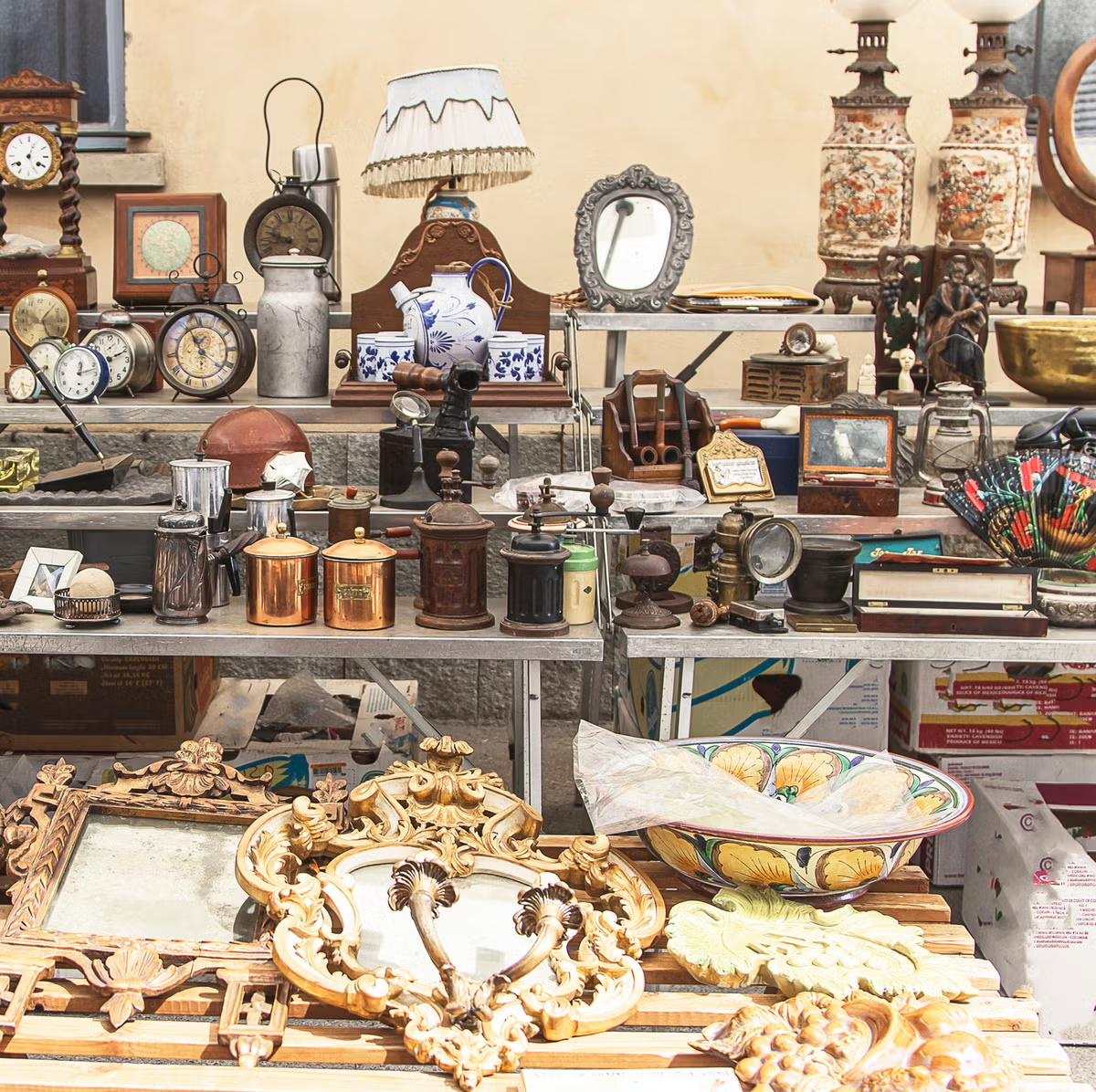
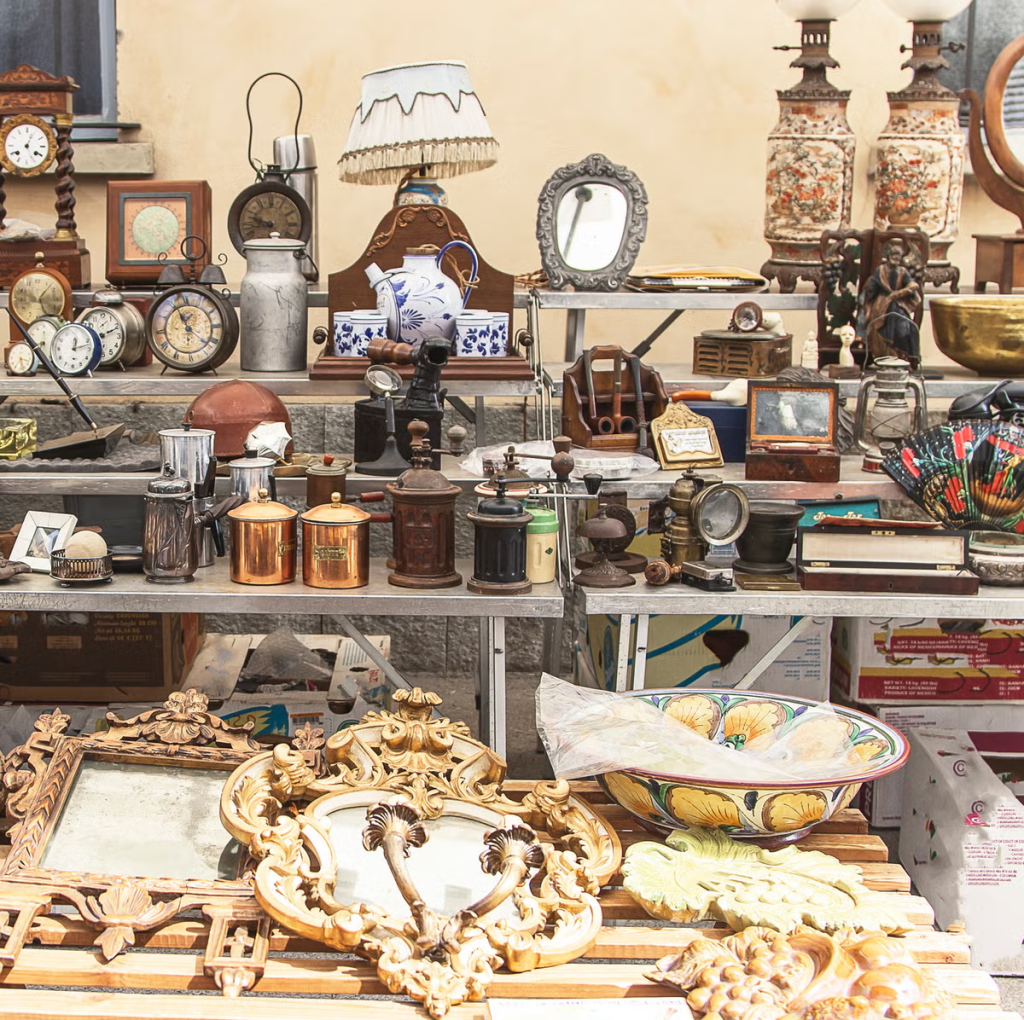
How does someone scale an antique business to the next level without being buried in junk?
Welcome to one of the strangest businesses on earth. A business where nothing is consistent, nothing is standardized, and nothing comes with a reorder number. There’s no supplier catalog. There’s no wholesale price list. There’s no “buy ten, get one free.” Every item is a one-off, every purchase is a gamble, and every sale is a negotiation. One day you find treasure. The next day you find nothing but chipped glass, overpriced junk, and a guy who swears his rusty lamp came from Abraham Lincoln’s summer house.
That’s what makes this business exciting. And it’s also what makes it incredibly hard to grow.
Because the antique business has one major problem that regular retail doesn’t have: inventory control. In corporate retail, you plan your assortment. You manage your supply chain. You build your pricing model. You reorder what sells. In antiques, you can’t do any of that. You buy what you can find, you price it based on experience and instinct, and you hope demand shows up at the right time. Success is often a mix of knowledge, timing, and yes… luck.
And then there’s the people.
The antique world is full of characters. Storytellers. Wheeling-dealers. People who can talk a $20 item into sounding like it belongs in a museum. You learn fast that not everyone coming to you wanting to be part of your organization is as honest or as direct as you’d expect, and some people will smile at you the whole time while they’re working an angle. A lot of them are in antiques for one simple reason — they don’t like working for anyone. And that means you run into a lot of people who don’t want structure, don’t want accountability, and don’t always operate with the same ethics you assume are normal in business.
And here’s another thing people don’t talk about enough. A surprising number of people in the antique business aren’t even in it because they want to run a real business or make serious money. They’re in it because they enjoy the excitement of buying and selling. They like the hunt. They like the social aspect. They like the thrill of telling stories and talking about what they “almost bought” or what they “used to have.” Many of them have another income stream — retirement money, Social Security, disability, a pension, or a spouse still working — so they don’t really care if something sells or not. They can sit on overpriced inventory forever because it doesn’t hurt them the way it hurts someone who is trying to actually make a living. And the truth is, some of these people aren’t dealers at all — they’re hoarders with a booth. They don’t want turnover, they want ownership. They don’t want to sell, they want to collect. Their “inventory” is really just a storage unit with price tags on it, and half the time the prices are so high it’s obvious they don’t actually want anyone to buy it.
That’s why you have to be careful. These are the people who will try to talk you into buying something based on emotion instead of value. They’ll swear it’s rare. They’ll swear it’s “worth big money.” They’ll tell you what they saw one sell for ten years ago or what it is selling for on eBay. Meanwhile the item is sitting on their shelf because it’s overpriced, and deep down they know it. And you also run into people who don’t want to take the time to learn the trade at all. They don’t study. They don’t research. They don’t understand condition, rarity, market trends, or demand. They just guess, inflate the price, and hope someone walks by who doesn’t know better.
So how does someone scale an antique business to the next level without being buried in junk?
The answer is simple, but not easy.
You stop thinking like a picker… and you start thinking like a curator.
The antique business doesn’t grow by selling more stuff. It grows by selling better stuff. That’s the part most dealers never understand. They think growth means more booths, more shelves, more storage units, more tables at the flea market, and more “inventory.” But what they’re really doing is building a junk warehouse with a cash register.
If you want to scale, you have to become picky. Not emotionally picky. Not “I like this so I’m keeping it” picky. You have to become professionally picky. You have to develop standards. You have to know what fits your brand, what sells consistently, what ships well, what has strong demand, and what attracts quality buyers. You can’t buy things just because the price is so cheap you call it a “can’t pass up.” I had a garage full of “can’t pass ups” when I started in this business, and trust me, that stuff really added up to serious money. And even today, I still find myself saying, “Oh I can’t pass this up.” But that mindset will bury you if you don’t control it.
And one last thing that should be carved in stone: never, and I mean never, buy something that is damaged, even if it’s only a buck. Damage is the fastest way to turn “cheap inventory” into dead inventory. It doesn’t matter what it could have been worth if it was perfect — it’s not perfect. You’re buying problems, not profit.
The best example of what scaling really looks like is the high-end auction world. Companies like Rago, Christie’s, and Sotheby’s don’t become powerful because they have more inventory. They become powerful because they are extremely selective. They don’t accept everything. In fact, they reject most of it. They know exactly what belongs in their world and what doesn’t. They don’t want low-dollar items. They don’t want clutter. They don’t want headaches. They don’t want merchandise that brings in bargain hunters, complainers, and time-wasters.
Their merchandise is like gold. It has intrinsic value, and their customers know it. That’s why their buyers are often wealthy. They’re not shopping for “things.” They’re shopping for assets. In that world, people aren’t spending money, they’re moving money. They’re buying history, rarity, and investment-grade objects that hold value and often increase over time.
But here’s the part people miss.
Those auction houses aren’t just selling objects. They’re selling confidence.
They’re selling credibility.
Their buyers believe that if an item is in that room, it’s already passed the test. It’s been vetted. It’s been researched. It’s been described correctly. It has provenance. It has a story with documentation behind it. And when you add that kind of trust to an object, it becomes more than “an antique.” It becomes portable wealth.
In the mean time, if you really want to grow in this business, you need to understand retail fundamentals. You need to know what GMROI stands for — Gross Margin Return on Investment. In plain English, it means margin times turnover, and turnover is the key word. I know so many antique dealers who refuse to sell items at a loss, or even less than what they think it’s worth. They carry around items for years. Some of them will even say they’d rather break it than sell it for less than cost. I am serious.
GMROI is a term I learned when I was very young in my retail career and it was drummed into our minds. You don’t make money until you sell everything you purchased that year. Inventory turnover is based on a yearly cycle, so if you have something for more than a year, you have a turnover rate of less than one — and that means you are losing money.
Let me give you a simple example. Say you want to sell Christmas trees at Christmas time. You know your selling season is Thanksgiving through December 25th. You also know your inventory is basically worthless after December 26th. If you start the season with 100 trees, they cost you $50 each, and you sell them for $100 each, your first goal isn’t profit — your first goal is getting your investment back. That’s $5,000 out of your pocket.
So let’s say you sell the first 50 trees at your full asking price of $100. Now you’ve brought in $5,000. Your investment is covered. You’re whole. At that point, you can sell the remaining 50 trees at a markdown price of $25 each — which is technically a loss — and you still make money on the overall deal. Fifty trees at $25 is another $1,250 in revenue that you never would have had if you let pride get in the way and dragged those trees into next year.
That’s retail thinking. And it applies to antiques more than most dealers want to admit.
Because the biggest trap in antiques is the fear of missing out. Dealers buy junk because they convince themselves it’s “inventory.” But inventory that doesn’t sell isn’t inventory. It’s dead weight. It’s storage costs. It’s clutter. It’s time wasted. It’s a business suffocating under its own mess.
The dealers who scale are the ones who learn that saying no is a business strategy. And sometimes saying yes to a lower offer is also a business strategy. Because cash flow beats pride every time.
Another thing those auction houses do better than anyone is control the environment. They create urgency. They create competition. They create prestige. They don’t sell to one buyer… they let buyers fight each other. That’s why auction results can blow past what a dealer thinks is “retail.” It’s not magic. It’s psychology. It’s controlled demand.
So if you’re a dealer trying to get to the next level, the goal isn’t to become bigger. The goal is to become better.
You build your name.
You build trust.
You narrow your focus, even if you still sell multiple categories.
You stop chasing every shiny object and start curating what fits your brand.
You develop standards for what you buy and what you refuse.
You stop being afraid to walk away.
Because at the end of the day, the antique business isn’t about having the most stuff.
It’s about having the right stuff.
And building a name strong enough that when people hear it, they assume one thing:
If it’s coming from you… it’s worth owning.
Discover more from Beebop's
Subscribe to get the latest posts sent to your email.

 Beebop's