
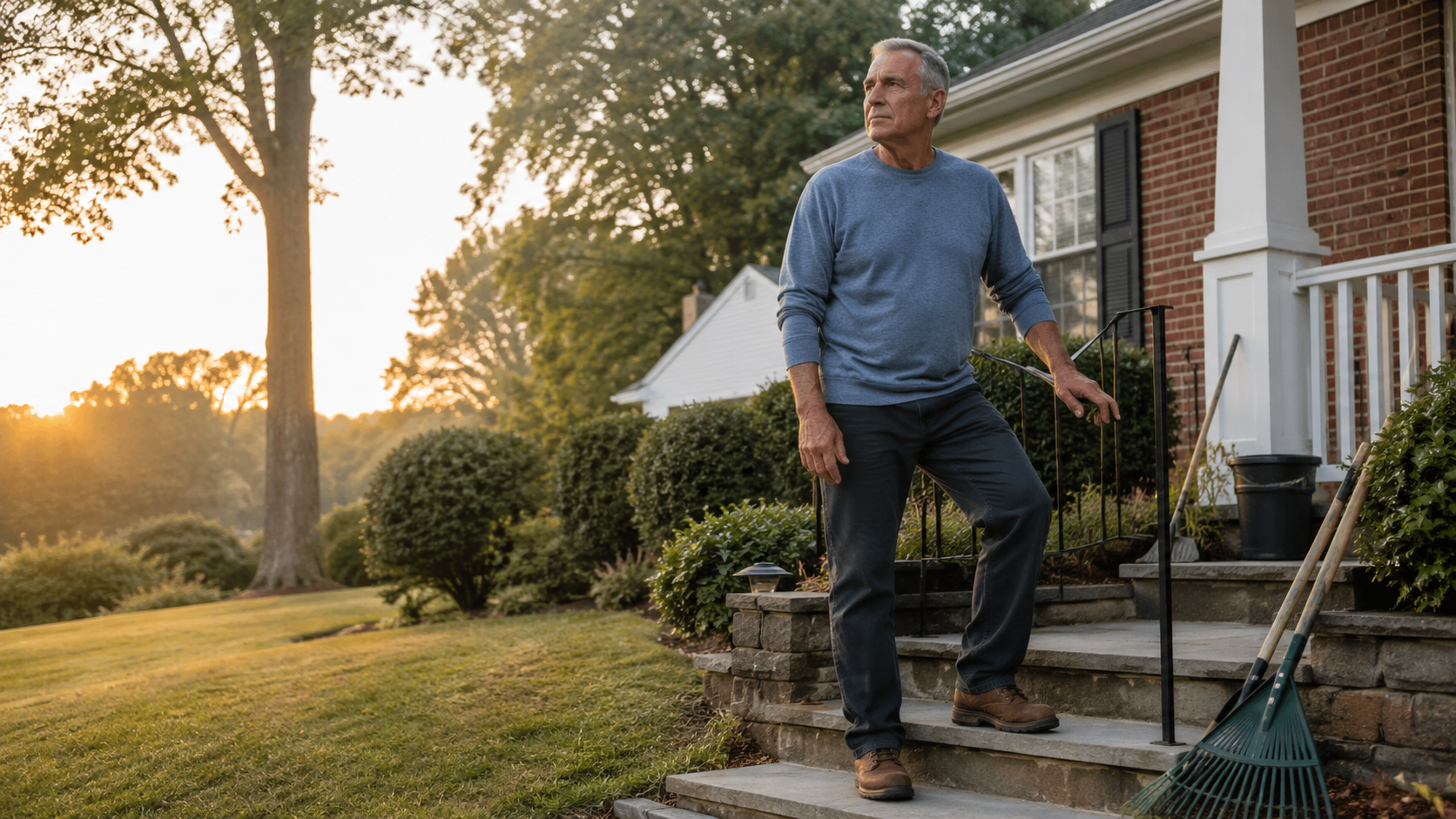
I’ll be 70 next year, and the older I get, the more I understand how someone can appear perfectly healthy and then suddenly go downhill.
The family will say, “He was driving six months ago. He was cutting his own grass. He was completely independent. What happened?”
Usually, it wasn’t really sudden. Little things had been building underneath the surface, and then one illness, fall, hospital stay, or personal loss pushed everything over the edge.
I think of it like an old house. It may look perfectly solid, but over the years, the furnace gets older, the wiring gets brittle, and the plumbing doesn’t work quite as well. Everything is still running—until one more thing goes wrong.
I know this from my own experience.
I am almost 70, but I still lift weights, do about 40 minutes on the elliptical, cut grass, work on properties, climb stairs, and stay busy. I’m in better physical condition than many people considerably younger than I am.
But I also have DISH in my spine, chronic neuropathy in my feet, and a back that can remind me very quickly that I’m not 40 anymore. This past summer, after doing too much physical work, my back went into one of the worst spasms I have ever experienced. The pain was close to a ten.
One day I was doing everything I normally do, and the next day I could barely move.
That will get your attention.
Fortunately, it was muscular, and I recovered. But it showed me how quickly things can change at this age. You can feel strong and capable, but you don’t have the same reserve you had when you were younger.
That reserve is the real difference.
At 30 or 40, you can get sick, spend several days in bed, and generally bounce back. At 70, a week in bed can cost you strength, balance, muscle, and confidence. You may recover from the original illness but never completely recover from everything that happened around it.
That is why hospitalization can be such a turning point for older people. They don’t sleep properly, they don’t eat normally, and they barely move. They can enter the hospital walking on their own and come home needing a walker.
It isn’t always because somebody made a mistake. Sometimes the body simply lost too much ground too quickly.
Muscle is a huge part of this. People think lifting weights at my age is about trying to look younger. That isn’t the main reason I do it. I do it because muscle keeps you independent.
Muscle helps you get out of a chair, climb stairs, carry groceries, work around the house, and catch yourself when you stumble. Once you lose strength and become afraid of falling, you move less. The less you move, the weaker you become. Before long, you are caught in a downward spiral.
The worst thing an older person can do is sit all day.
You don’t have to join a gym or become a bodybuilder. Walk. Cut the grass. Work in the garden. Wash the car. Take the stairs. Lift something. Just keep moving. If you stop using your body, it starts getting the message that it is no longer needed.
The same thing happens to the mind.
Retirement can be wonderful, but a person still needs a reason to get up in the morning. Friends pass away, children are busy with their own lives, and the social circle gets smaller. Then a husband or wife dies, and sometimes the surviving spouse declines soon afterward.
I don’t believe that is always a coincidence.
I saw some of this with my own mother. Once she retired and stopped getting up and going to work every day, I began to notice a decline in her. Work had given her a daily routine, responsibility, contact with other people, and a reason to keep moving. When that disappeared, I believe something important disappeared with it.
People need purpose. They need someone or something that depends on them. For me, it is my family, my grandchildren, working on properties, buying and selling things, writing my family stories, and working on the book I never finished. Those things keep me thinking, researching, planning, and looking forward.
Sitting in a chair watching television all day is not retirement. It is surrender.
Medications can also become part of the problem. One doctor gives you one pill, another doctor adds something else, and then a specialist adds two more. Eventually, nobody is looking at the entire pile.
Dizziness, weakness, fatigue, confusion, and balance problems can sometimes be caused or worsened by medication. I have always believed in taking medicine when it is truly needed, but I don’t believe every problem automatically needs another pill.
The other mistake people make is ignoring little warning signs.
They start walking differently. They stop eating as much. They become tired more often. They lose interest in things they once enjoyed. They become slightly confused, stop going places, or begin holding onto furniture when they walk.
The changes are small enough that everybody makes excuses for them.
“He’s just getting older.”
“She’s having a bad week.”
“He doesn’t feel like going out anymore.”
Older people are also very good at hiding problems because they are afraid someone will take away their car, move them out of their home, or start making decisions for them. I completely understand that fear. Independence is one of the last things any of us wants to give up.
But hiding a small problem can allow it to become a much larger one.
I don’t believe turning 70 means that your life is practically over. I feel strong, I stay active, I eat carefully, I control my weight, and I have never smoked or been a drinker. Those decisions have helped me tremendously.
But I’m also not foolish enough to believe I am bulletproof.
At this age, staying healthy takes some effort. There is no magic pill. You have to move, stay strong, watch your weight, eat reasonably well, stay hydrated, protect your sleep, use your brain, and maintain a purpose.
Aging isn’t always what causes people to suddenly decline. More often, it is the gradual loss of strength, movement, connection, purpose, and the ability to recover.
Then one final event exposes everything that had quietly been building.
The best thing we can do is pay attention before that happens—and keep using our bodies and minds for as long as God allows us to.
Discover more from Beebop's
Subscribe to get the latest posts sent to your email.


